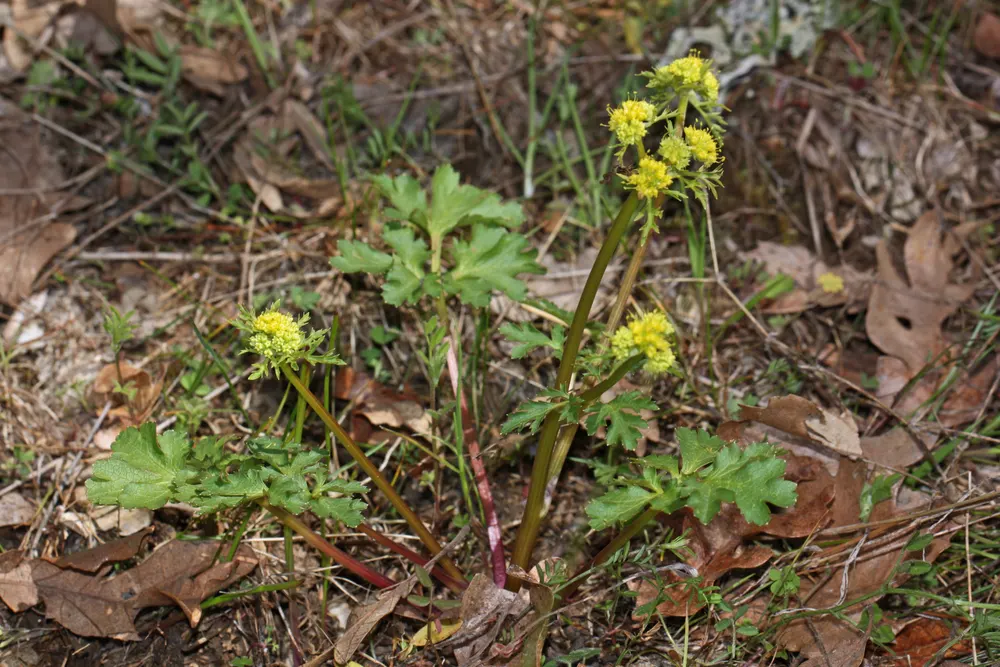
Photo: Walter Siegmund (talk), CC BY-SA 3.0 (via Wikimedia Commons)
Sierra Snakeroot
Sanicula graveolens
Also known as Northern Sanicle, Sierra Sanicle
Key benefits
✦Traditional uses
✦The genus name Sanicula comes from the Latin sanare, meaning to heal, a nod to the long reputation this plant family carries in both European and North American herbal history as a wound and blood-cleansing herb. Its better-known European cousin, Sanicula europaea, was gathered for centuries for cuts, sore throats, and internal complaints, but Sierra Snakeroot itself is a much quieter, less documented member of the family. It grows wild across dry western slopes and forest clearings, and while various native Sanicula species are known to have caught the attention of western tribes for topical use, specific, well-recorded traditions for this exact species are sparse. Today it is valued far more as a native wildflower, a curiosity of the carrot family, and a plant that quietly carries a healer's name than as a working medicinal herb.
How to grow & use it
✦The full apothecary for Sierra Snakeroot
Traditional remedies and step-by-step preparations, a complete growing guide, and how to harvest, dry, and store it, all unlocked with HerbLens Unlimited.
- ✦Remedies & preparations
- ✦ Growing guide
- ✦Harvest & storage
From under $6 a month. Free plant identifications always included.
- ✦Yarrow
- ✦Penstemon
- ✦Lupine
- ✦Sanicula europaea (European sanicle), the better-documented relative for those interested in the traditional sanicle reputation
- ✦Self-heal (Prunella vulgaris), another wild herb long associated with wound care
“For the quiet, dry slopes where the pines thin out and small yellow umbels catch the high mountain light.”
The species name graveolens simply means heavy-smelling in Latin, the same descriptive epithet given to strong-scented plants like rue, a nod to the distinctive odor released when its foliage is crushed.
Grows in the carrot family alongside seriously toxic lookalikes such as poison hemlock and water hemlock, so it should never be picked or eaten without expert identification. It has no documented history of use as food or medicine.