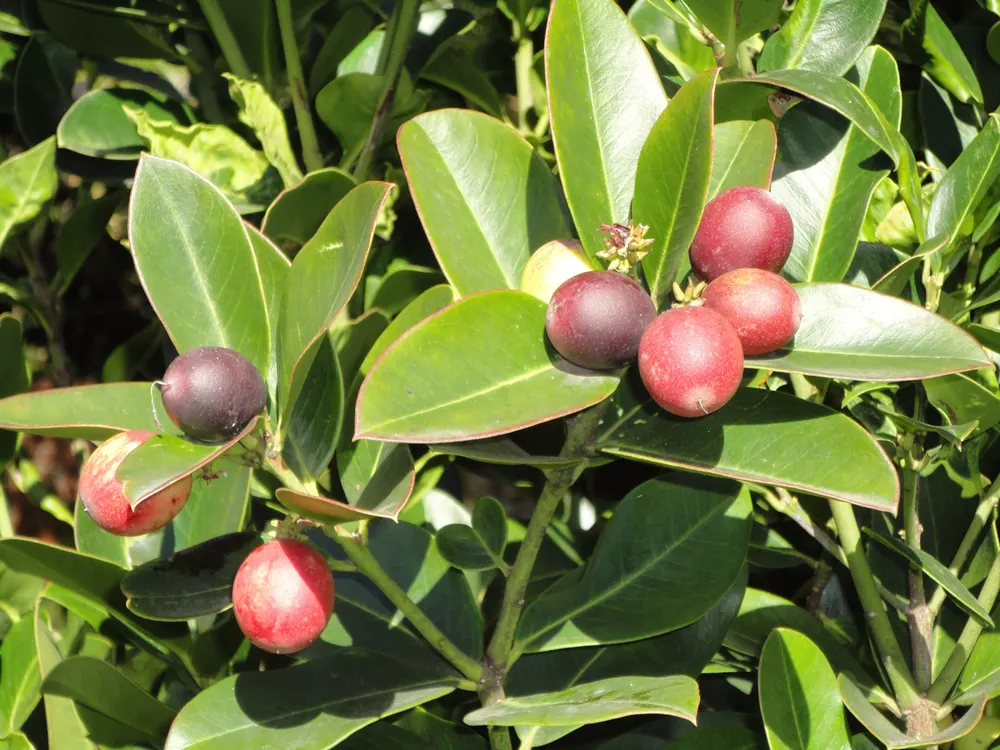
Photo: JMK, CC BY-SA 3.0 (via Wikimedia Commons)
Bushman's Poison Bush
Acokanthera oppositifolia
Also known as Bushman's poison bush, Wintersweet, Common poison bush, Poison arrow plant, Cape Bushman's poison
Key benefits
✦Traditional uses
✦Acokanthera oppositifolia holds a serious place in southern African ethnobotany, not as a healing herb but as one of the most potent arrow poisons known to traditional hunters. The San and other indigenous peoples of the region reduced the bark, wood, and latex-like sap into a thick paste applied to arrowheads and spear points, powerful enough to bring down large game such as antelope, and reportedly even elephant, through cardiac failure. Because the toxin acts slowly but relentlessly, hunters could track wounded animals for hours or days before the poison took full effect. This plant's story is one of respect and caution passed down through generations, never of home remedy or kitchen use.
How to grow & use it
✦The full apothecary for Bushman's Poison Bush
Traditional remedies and step-by-step preparations, a complete growing guide, and how to harvest, dry, and store it, all unlocked with HerbLens Unlimited.
- ✦Remedies & preparations
- ✦ Growing guide
- ✦Harvest & storage
From under $6 a month. Free plant identifications always included.
“A glossy, fragrant hedge with centuries of hunters' lore folded into every drop of its sap, best admired from a respectful distance.”
The cardiac glycosides in Acokanthera are chemically close cousins of ouabain, a compound once extracted from related African plants and used, in minute and strictly controlled clinical doses, as a heart medicine in parts of Europe. It is a striking reminder that the line between a deadly poison and a medicine can come down entirely to dose and expertise, never to home experimentation.
All parts of Acokanthera oppositifolia, including the bark, wood, sap, leaves, and fruit, are highly toxic and contain potent cardiac glycosides (cardenolides) that can cause dangerous heart arrhythmia and death if ingested, even in small amounts. The plant's sap was traditionally boiled down by southern African hunters into a lethal arrow poison capable of felling large game, and it carries the same danger to humans and pets today. Skin contact with the sap can cause irritation, and any part of the plant should be kept well away from children, pets, and livestock. This plant has no established safe traditional or modern internal use and should never be brewed, chewed, or prepared as a remedy. If ingestion or significant sap exposure is suspected, treat it as a medical emergency and seek immediate care from a physician or poison control center. Always consult a qualified professional before planting anything from the Acokanthera genus in a garden accessible to children or animals.