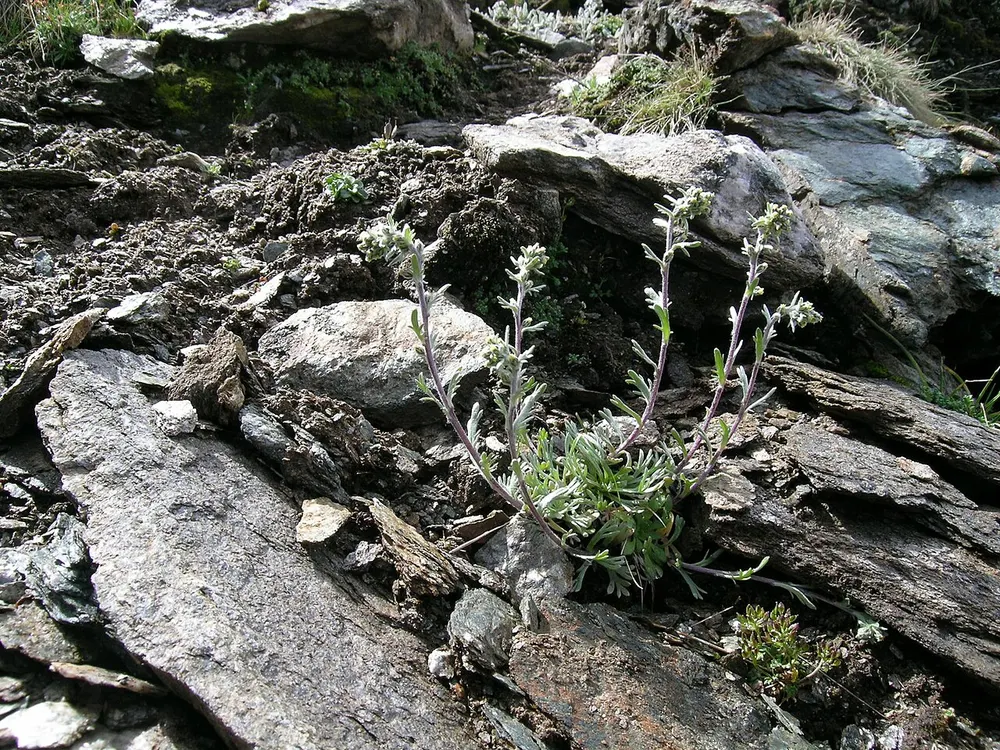
Photo: No machine-readable author provided. Thommybe assumed (based on copyright claims)., CC BY-SA 3.0 (via Wikimedia Commons)
Genepi (Alpine Wormwood)
Artemisia genipi
Also known as Genepi, Alpine Wormwood, Black Genepi, Glacier Wormwood, Génépi Noir
Key benefits
✦Traditional uses
✦High in the Alps, where little else could survive the thin soil and biting wind, shepherds and villagers sought out genepi's silvery, fragrant tufts among the scree. Its bitter, aromatic leaves were traditionally steeped or macerated to settle the stomach after heavy mountain fare and to bring warmth back to a chilled body. Generations of Savoyard, Swiss, and Italian alpine families passed down the practice of gathering it in the short window of summer bloom, treating it as a hard-won reward of the high pastures rather than an everyday herb. It remains best known today as the soul of the traditional liqueur that bears its name, sipped as a digestif and a toast to a hard climb finished.
How to grow & use it
✦The full apothecary for Genepi (Alpine Wormwood)
Traditional remedies and step-by-step preparations, a complete growing guide, and how to harvest, dry, and store it, all unlocked with HerbLens Unlimited.
- ✦Remedies & preparations
- ✦ Growing guide
- ✦Harvest & storage
From under $6 a month. Free plant identifications always included.
- ✦Mint
- ✦Gentian root
- ✦Yarrow
- ✦Wormwood (Artemisia absinthium)
- ✦Gentian root
“For a taste of thin mountain air, sun-warmed stone, and the old shepherd's cure for a heavy meal.”
Because genepi grows so slowly among high alpine rocks and was gathered so eagerly for liqueur making, several Artemisia genipi populations in the French and Italian Alps are now legally protected, and pickers in some areas once needed a permit just to harvest it.
Genepi contains thujone, which can be harmful in concentrated or frequent use, so traditional preparations were taken only sparingly. Avoid it during pregnancy and breastfeeding, and those allergic to ragweed or other Asteraceae plants should steer clear.