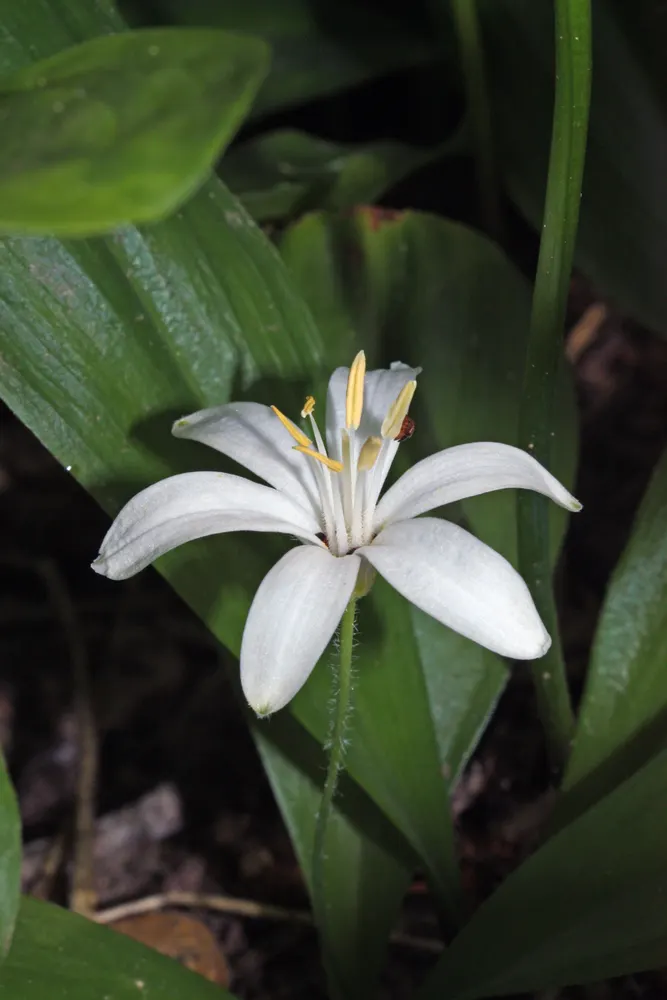
Photo: Walter Siegmund (talk), CC BY-SA 3.0 (via Wikimedia Commons)
Queen's Cup
Clintonia uniflora
Also known as Bride's Bonnet, One-Flowered Clintonia, Blue-Bead, Queen's Cup Beadlily
Key benefits
✦Traditional uses
✦Queen's cup grows low and quiet on the floor of old cedar and hemlock forests, easy to miss until its single white flower opens like a small star in the duff. Several Pacific Northwest First Nations traditionally crushed the broad, glossy leaves and applied them as a soothing poultice to minor burns, cuts, sores, and insect bites. Because the plant spreads so slowly and depends on undisturbed, mature forest soil, it was gathered sparingly and with care, and many communities treated its presence as a sign that a forest was old and healthy. The plant later carried the name of naturalist and New York governor DeWitt Clinton, an honor given to a genus of shy woodland lilies he likely never saw growing wild.
How to grow & use it
✦The full apothecary for Queen's Cup
Traditional remedies and step-by-step preparations, a complete growing guide, and how to harvest, dry, and store it, all unlocked with HerbLens Unlimited.
- ✦Remedies & preparations
- ✦ Growing guide
- ✦Harvest & storage
From under $6 a month. Free plant identifications always included.
- ✦Plantain leaf
- ✦Yarrow
- ✦Plantain leaf
- ✦Yarrow leaf
“For a single white star glowing on the shaded forest floor, and an old, gentle tradition of leaves laid on small hurts.”
Queen's cup produces only one berry per plant, a single startling globe of porcelain blue, and because the plant is so slow to spread, foragers and ecologists alike treat a thriving patch of it as a quiet signal that the surrounding forest has gone a long time undisturbed.
The single blue berry is considered inedible and shouldn't be eaten; only the leaves have a history of external use in folk poultices.