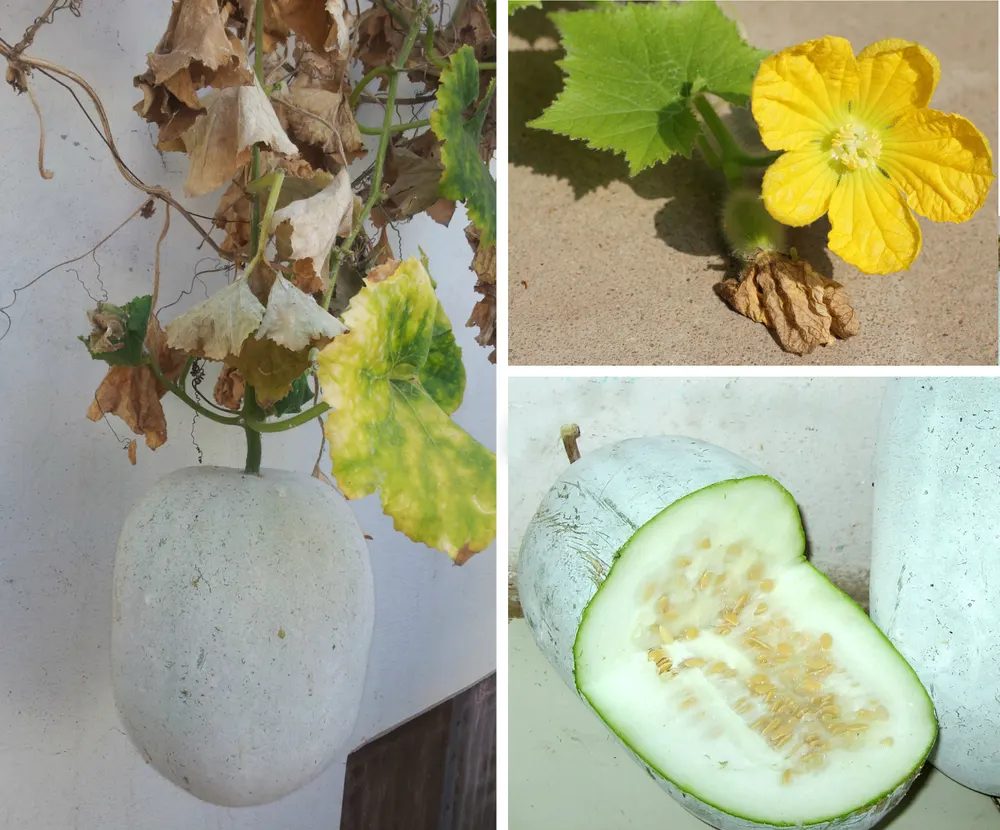
Photo: Akshay.paramatmuni1987 (left photo), মৌচুমী (bottom right photo), Zhangzhugang (upper right photo), montage by User:RoRo, CC BY-SA 3.0 (via Wikimedia Commons)
Winter Melon
Benincasa hispida
Also known as Ash Gourd, Wax Gourd, White Gourd, Dong Gua, Petha
Key benefits
✦Traditional uses
✦Long before it appeared candied in Chinese New Year sweets or simmered into Southeast Asian soups, winter melon was prized across Asia as one of the great cooling foods, the kind offered to a body overheated by summer, fever, or illness. In Ayurvedic tradition it is known as petha and has been used to calm an unsettled stomach and support the urinary system, while Traditional Chinese Medicine has long classified dong gua as a gentle remedy for clearing heat and easing water retention. Its mild, almost neutral flavor made it a forgiving kitchen staple, one that could carry stronger herbs and spices while doing its own quiet work in the background.
How to grow & use it
✦The full apothecary for Winter Melon
Traditional remedies and step-by-step preparations, a complete growing guide, and how to harvest, dry, and store it, all unlocked with HerbLens Unlimited.
- ✦Remedies & preparations
- ✦ Growing guide
- ✦Harvest & storage
From under $6 a month. Free plant identifications always included.
- ✦Ginger
- ✦Coriander
- ✦Mint
- ✦Chayote squash
- ✦Cucumber
“You want something cooling, quiet, and easy on the stomach after too much heat, too much richness, or too little rest.”
A whole winter melon, left uncut, can keep for months in a cool pantry, which is exactly how it earned its name: not because it grows in winter, but because its thick, waxy rind lets it be stored and eaten long after the vine itself is gone.
Winter melon is a common food vegetable and safe in normal amounts. In concentrated medicinal form it has a mild diuretic and blood-sugar-lowering effect, so be mindful if you take diuretic, blood pressure, or diabetes medication.