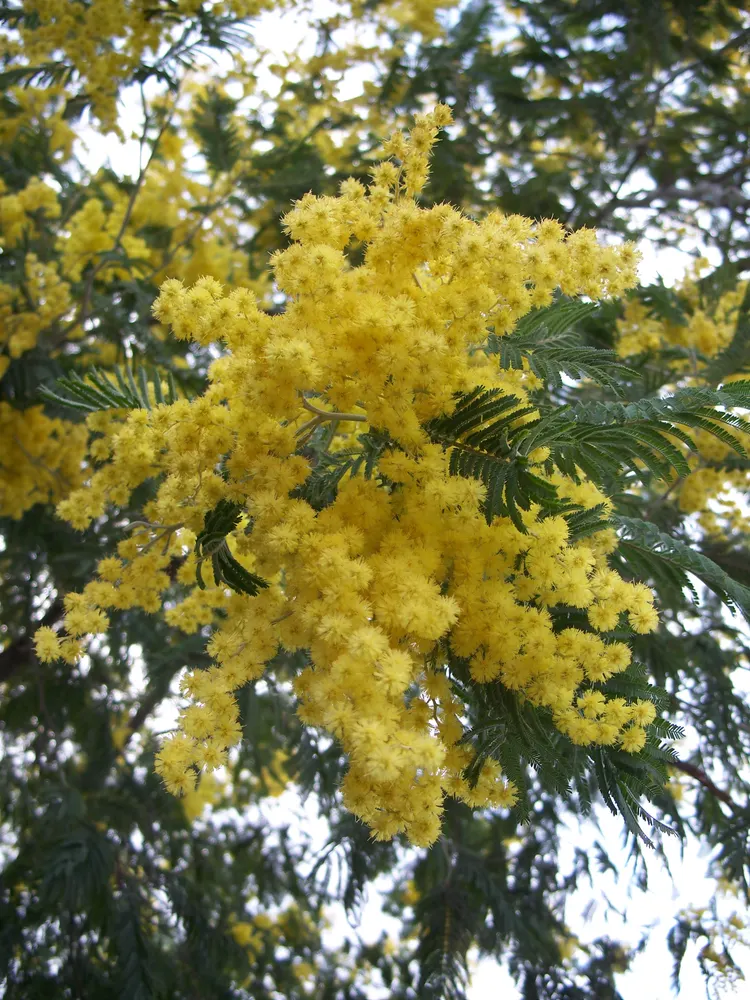
Photo: Eugene Zelenko (talk · contribs), CC BY-SA 4.0 (via Wikimedia Commons)
Silver Wattle
Acacia dealbata
Also known as Mimosa, Blue Wattle, Silver Acacia
Key benefits
✦Traditional uses
✦Long before it perfumed the great gardens of the Riviera, silver wattle grew wild across the hills of southeastern Australia, where Aboriginal communities valued its gum as a sweet, chewable food and used its bark and wood for tools, twine, and tanning hides. When the tree was carried to Europe in the nineteenth century, its honeyed golden blooms became an instant sensation, prized by perfumers in Grasse for their soft, powdery scent and by florists for their cheerful winter color. Folk herbalists in parts of the Mediterranean came to steep the flowers as a gentle, comforting tea for winter coughs and restless evenings, while the tannin-rich bark was simmered into washes for minor skin irritations, much as oak bark has long been used elsewhere. Today the tree is better known for its fragrance and its beauty than for its medicine, but its story runs deep in both traditions.
How to grow & use it
✦The full apothecary for Silver Wattle
Traditional remedies and step-by-step preparations, a complete growing guide, and how to harvest, dry, and store it, all unlocked with HerbLens Unlimited.
- ✦Remedies & preparations
- ✦ Growing guide
- ✦Harvest & storage
From under $6 a month. Free plant identifications always included.
- ✦Lavender
- ✦Rose
- ✦Orange blossom
- ✦Linden flower
- ✦Elderflower
“For the first breath of gold before the last frost has even left.”
In Italy, sprigs of mimosa are given as gifts every March 8th to celebrate International Women's Day, a tradition that began in Rome in 1946 because the golden blooms were one of the few flowers in full color that early in spring.
Not for eating; its pollen is a common trigger for hay fever, and its tannin-rich bark and foliage can cause digestive upset if consumed in quantity.