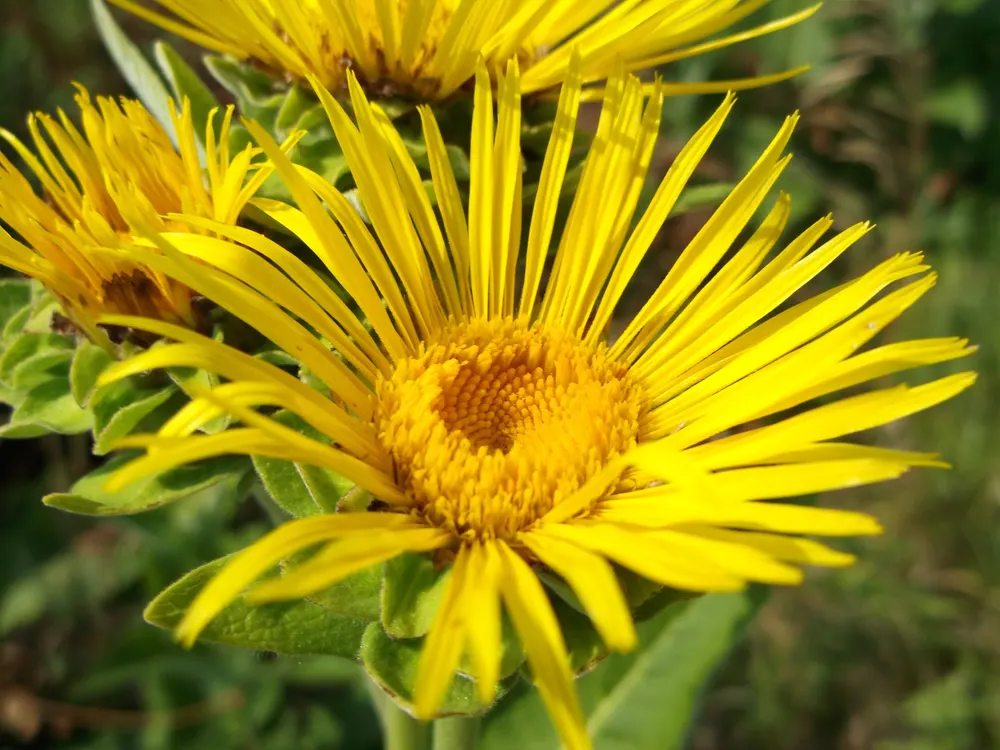
Photo: Natthager, CC BY-SA 4.0 (via Wikimedia Commons)
Elecampane
Inula helenium
Also known as Elfdock, Horseheal, Scabwort, Wild Sunflower, Yellow Starwort
Key benefits
✦Traditional uses
✦Elecampane has been a cottage-garden and apothecary staple since antiquity, prized above all for its thick, aromatic root. European herbalists for centuries turned to it for lingering coughs, bronchial troubles, and damp, stubborn chest complaints, often candying the root into a sweet to make the medicine more bearable for children. The Greeks and Romans grew it widely, and it traveled into monastery gardens throughout the Middle Ages as a trusted remedy for the lungs and the digestion alike. Its old country name, elfdock, hints at how deeply this humble roadside giant was woven into folk life long before it earned a place in formal herbal texts.
How to grow & use it
✦The full apothecary for Elecampane
Traditional remedies and step-by-step preparations, a complete growing guide, and how to harvest, dry, and store it, all unlocked with HerbLens Unlimited.
- ✦Remedies & preparations
- ✦ Growing guide
- ✦Harvest & storage
From under $6 a month. Free plant identifications always included.
- ✦Thyme
- ✦Licorice Root
- ✦Mullein
- ✦Mullein
- ✦Marshmallow Root
“When a damp, stubborn cough calls for an old-fashioned, deep-rooted ally.”
According to old legend, elecampane sprang up from the ground where Helen of Troy's tears fell, and the plant's species name, helenium, is said to honor her directly.
Elecampane can cause allergic reactions or skin irritation in people sensitive to ragweed or daisies, and large doses may upset the stomach. It may affect blood sugar, so use caution alongside diabetes medication, and it's traditionally avoided during pregnancy and breastfeeding.