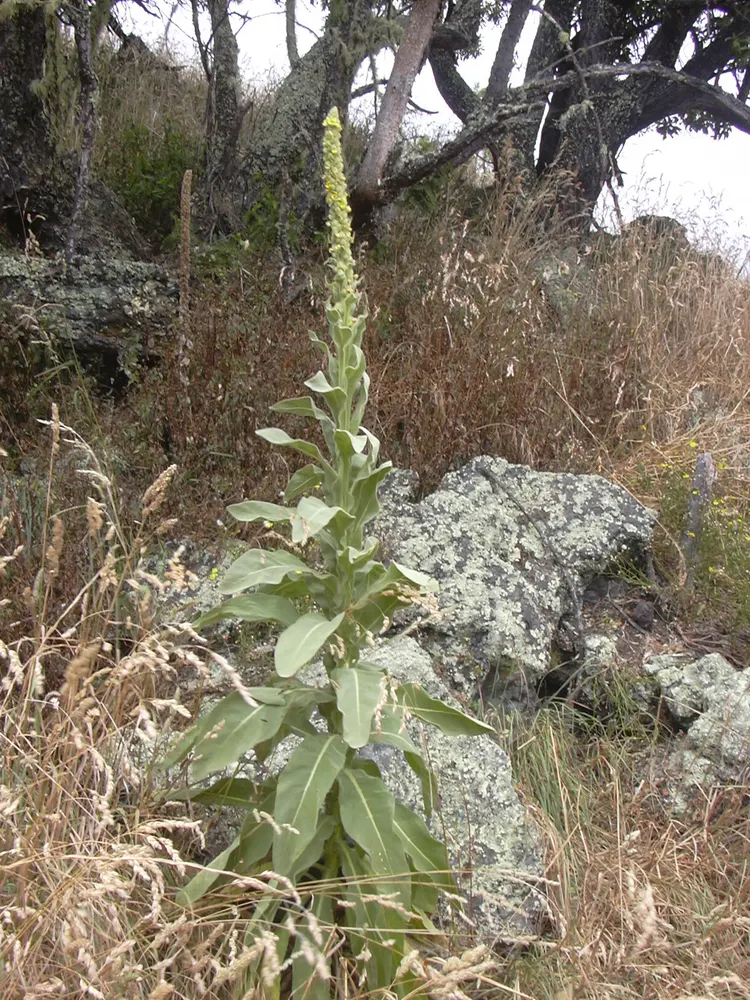
Photo: Forest & Kim Starr, CC BY 3.0 (via Wikimedia Commons)
Mullein
Verbascum thapsus
Also known as Great Mullein, Common Mullein, Candlewick Plant, Velvet Plant, Torches
Key benefits
✦Traditional uses
✦Long before it was tidied into gardens, mullein grew wild along roadsides and fence lines, and generations of herbalists on both sides of the Atlantic came to know its soft, flannel-like leaves as a friend to the lungs. European folk healers steeped the leaves for coughs and chest complaints, while Native American communities adopted the plant after its arrival and used it in much the same way, sometimes smoking the dried leaves for respiratory relief. The flowers, gathered one by one as they opened along the tall stalk, were traditionally infused in oil and warmed gently for use in the ear. Pioneers found even more uses for its velvety leaves, from insulating their boots to lining shoes, which is part of how it earned its more colorful nicknames.
How to grow & use it
✦The full apothecary for Mullein
Traditional remedies and step-by-step preparations, a complete growing guide, and how to harvest, dry, and store it, all unlocked with HerbLens Unlimited.
- ✦Remedies & preparations
- ✦ Growing guide
- ✦Harvest & storage
From under $6 a month. Free plant identifications always included.
- ✦Thyme
- ✦Licorice root
- ✦Marshmallow root
- ✦Coltsfoot
- ✦Marshmallow leaf
“When a cough won't settle and the chest feels tight, reach for mullein's soft, velvety leaves.”
Mullein's tall dried stalks were once dipped in tallow or wax and burned as torches, which is exactly how the plant earned the nickname candlewick plant.
Mullein seeds are toxic and were historically used to stun fish, so they should never be eaten or brewed. Leaf tea must be strained well, since the fine leaf hairs can irritate the throat, and the flower oil is for external use only, never in a perforated eardrum.