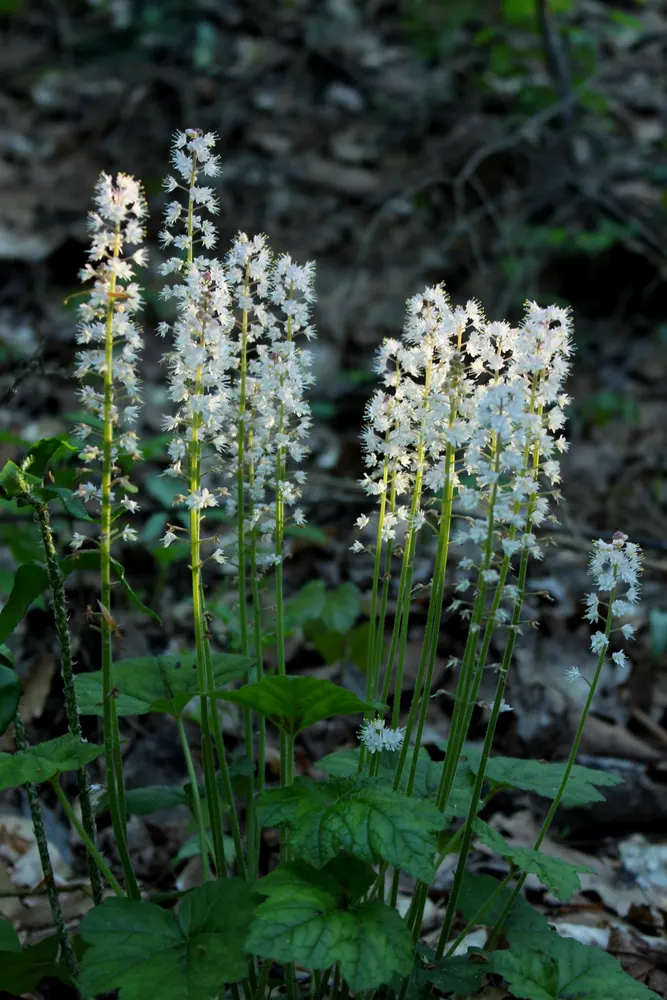
Photo: Wasrts, CC BY-SA 4.0 (via Wikimedia Commons)
Foamflower
Tiarella cordifolia
Also known as Heartleaf foamflower, False miterwort, Coolwort
Key benefits
✦Traditional uses
✦Foamflower grows low and quiet on the forest floor, easy to overlook until its foamy white flower spikes catch the spring light. Some Iroquois communities are recorded as chewing the fresh leaves to soothe sore mouths and steeping the plant as a mild wash and tonic for kidney and bladder complaints. It never became a headline herb the way its woodland neighbors did, but it earned a quiet, steady place in the home remedies of people who lived close to the forest. Today it is better known and more widely used as a cherished native garden plant than as a medicine.
How to grow & use it
✦The full apothecary for Foamflower
Traditional remedies and step-by-step preparations, a complete growing guide, and how to harvest, dry, and store it, all unlocked with HerbLens Unlimited.
- ✦Remedies & preparations
- ✦ Growing guide
- ✦Harvest & storage
From under $6 a month. Free plant identifications always included.
- ✦Wild ginger
- ✦Violet leaf
- ✦Wintergreen
- ✦Self-heal
- ✦Cleavers
“For the hushed, green light of a spring woodland, when the trees are only just beginning to leaf out overhead.”
Foamflower gets its name from its flower spikes, tiny five-petaled stars packed so densely along the stem that from a distance they look like a drift of sea foam settled onto the forest floor.
Foamflower has no significant toxicity on record and is grown mainly as a garden plant rather than used medicinally.