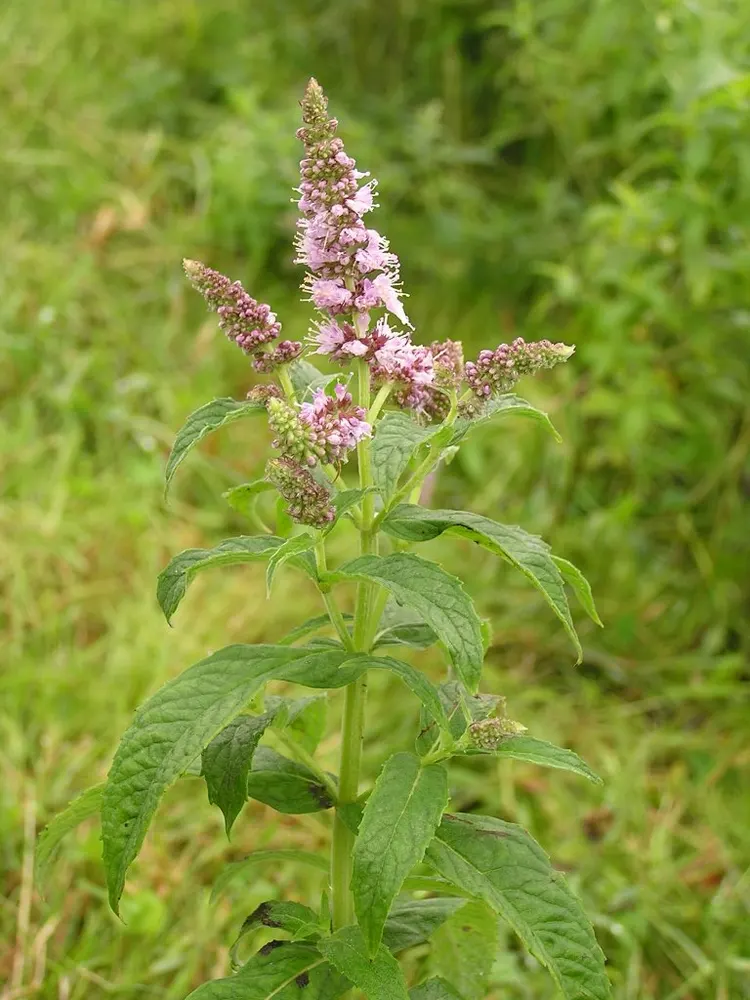
Photo: Michael Becker, CC BY-SA 3.0 (via Wikimedia Commons)
Wild Mint
Mentha longifolia
Also known as Horse Mint, River Mint, Wild Horsemint
Key benefits
✦Traditional uses
✦Long before it was tamed into garden borders, wild mint grew wherever water lingered, and the people who lived near those streams and ditches came to lean on it. Across Persian, Arab, and European herbal traditions alike, it was steeped after meals to settle the stomach, ease gas and cramping, and calm a queasy belly. Its sharp, cooling aroma also made it a favorite for stuffy heads and winter coughs, breathed in as steam or sipped as a warming tea. In many kitchens it never stopped being medicine and food at once, a handful tossed into the pot doing double duty as flavor and comfort.
How to grow & use it
✦The full apothecary for Wild Mint
Traditional remedies and step-by-step preparations, a complete growing guide, and how to harvest, dry, and store it, all unlocked with HerbLens Unlimited.
- ✦Remedies & preparations
- ✦ Growing guide
- ✦Harvest & storage
From under $6 a month. Free plant identifications always included.
- ✦Chamomile
- ✦Lemon Balm
- ✦Ginger
- ✦Spearmint
- ✦Peppermint
“When a cup of tea should taste like a walk along a cool streambank.”
Wild mint is thought to be one of the natural parents of common spearmint, meaning the mint leaf tucked into so many kitchens around the world likely traces part of its lineage straight back to this rambling wild plant of streambanks and ditches.
Wild mint is safe as a culinary herb or tea in normal amounts, though it can worsen heartburn in people with acid reflux or GERD. Concentrated mint essential oil should never be given to infants or young children, as it can trigger dangerous breathing spasms.