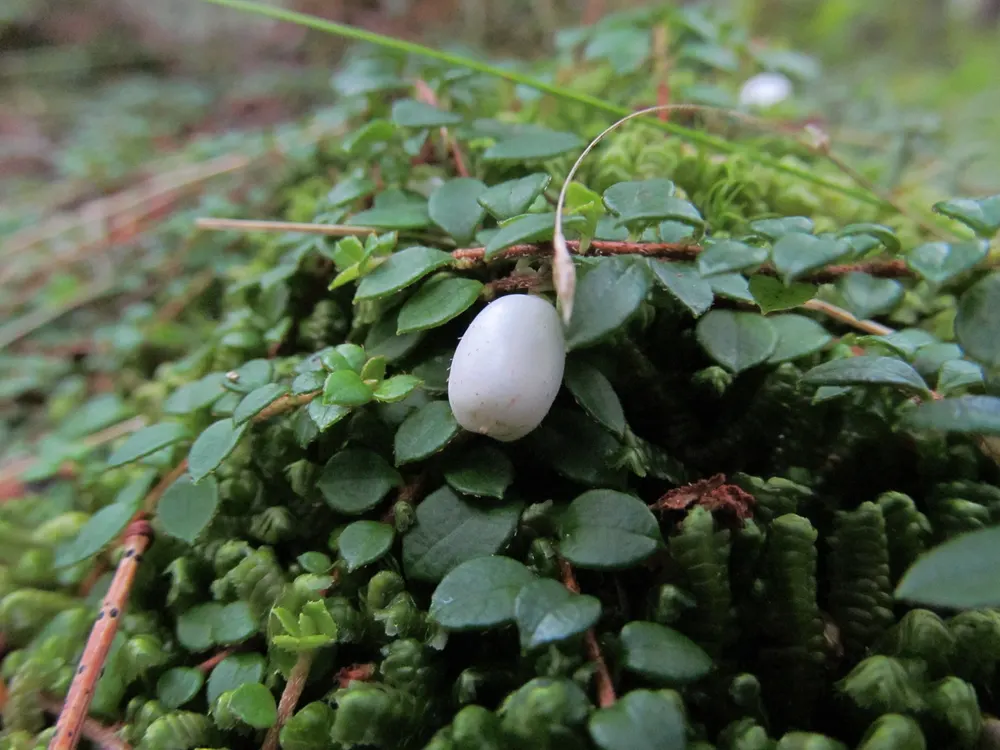
Photo: Jomegat, CC BY-SA 3.0 (via Wikimedia Commons)
Creeping Snowberry
Gaultheria hispidula
Also known as Creeping Snowberry, Moxie Plum, Maidenhair Berry, Creeping Pearlberry, Moxieberry
Key benefits
✦Traditional uses
✦Long before it had a place in field guides, creeping snowberry was a quiet staple of northern forest life. Native peoples of the boreal woodlands, from the Algonquin to the Cree and beyond, gathered its small white berries as a trailside nibble and steeped its wintergreen-scented leaves into a warming tea for upset stomachs and winter colds. Trappers and woodsmen carried on the habit, chewing a few leaves for their clean, minty bite on long walks through the snow. It never became a famous herb, but in the places it grows, it has been trusted and gathered for generations.
How to grow & use it
✦The full apothecary for Creeping Snowberry
Traditional remedies and step-by-step preparations, a complete growing guide, and how to harvest, dry, and store it, all unlocked with HerbLens Unlimited.
- ✦Remedies & preparations
- ✦ Growing guide
- ✦Harvest & storage
From under $6 a month. Free plant identifications always included.
- ✦Wintergreen
- ✦Sweet birch
- ✦Peppermint
- ✦Wintergreen (Gaultheria procumbens)
- ✦Peppermint
“For the hush of a mossy bog underfoot, and a leaf that tastes like winter itself.”
The genus Gaultheria honors Jean-François Gaultier, an 18th-century physician and botanist working in Quebec, which fits neatly with this plant's deep roots in the cold forests of eastern Canada and the northern United States.
Creeping snowberry contains methyl salicylate, the same aspirin-like compound in wintergreen, so avoid it if you have a salicylate or aspirin sensitivity, take blood-thinning medication, or are pregnant or nursing. Don't give concentrated preparations to children.