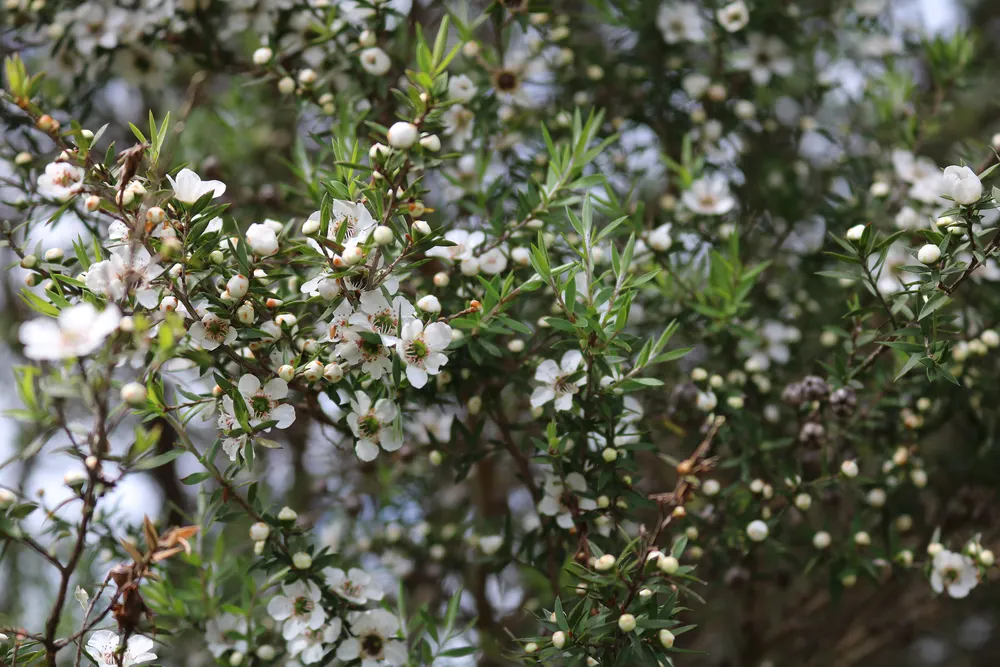
Photo: Bjankuloski06, CC BY 4.0 (via Wikimedia Commons)
Manuka
Leptospermum scoparium
Also known as Tea Tree, New Zealand Tea Tree, Kahikatoa, Broom Tea Tree
Key benefits
✦Traditional uses
✦Long before manuka honey found its way onto pharmacy shelves around the world, the Maori of New Zealand relied on this hardy little tree as a cornerstone of rongoa, their traditional plant medicine. The leaves and bark were steeped into infusions for fevers, coughs, and aching joints, while crushed leaves were inhaled as steam to clear the head during a cold. When Captain Cook's crew landed in the 1770s, they brewed the aromatic leaves into a passable substitute for tea, which is how the plant earned its common English name. Bark and inner wood were also used to treat burns and skin complaints, an early nod to the soothing reputation manuka still carries today.
How to grow & use it
✦The full apothecary for Manuka
Traditional remedies and step-by-step preparations, a complete growing guide, and how to harvest, dry, and store it, all unlocked with HerbLens Unlimited.
- ✦Remedies & preparations
- ✦ Growing guide
- ✦Harvest & storage
From under $6 a month. Free plant identifications always included.
- ✦Lemon
- ✦Ginger
- ✦Kanuka
- ✦Tea tree (Melaleuca alternifolia)
- ✦Kanuka (Kunzea ericoides)
“For the quiet comfort of an old New Zealand remedy, one sip and one gentle dab at a time.”
Manuka honey's strength is often graded by its UMF, or Unique Manuka Factor, a rating beekeepers and buyers still use today to judge how concentrated the honey's naturally occurring compounds are, all traced back to the nectar of this one modest coastal shrub.
Not toxic, but manuka honey, like all honey, should never be given to infants under one year due to the risk of botulism. The essential oil is highly concentrated and should always be diluted before topical use and never taken internally.