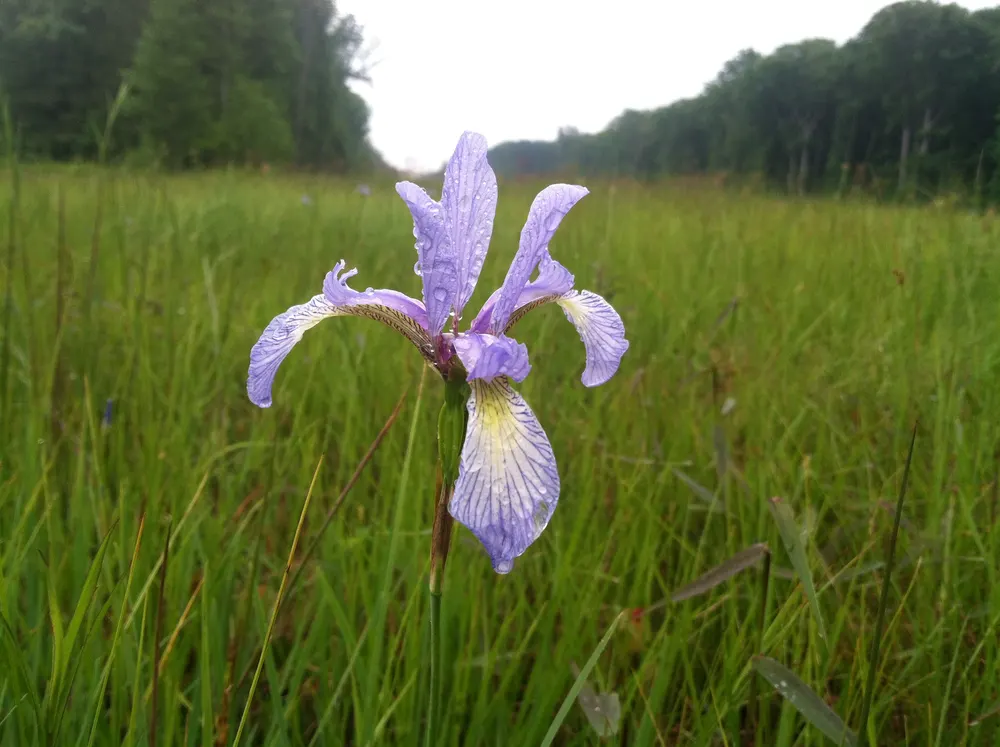
Photo: Devin Rodgers and Mason Brock (Masebrock), Public domain (via Wikimedia Commons)
Slender Blue Flag
Iris prismatica
Also known as Cube-seed Iris, Cube-seeded Iris, Slender Blue Flag Iris
Key benefits
✦Traditional uses
✦Iris prismatica belongs to a family long noticed by people living near the wet meadows and marshes it favors, its slim blue-violet blooms rising above grassy leaves each June like a signature of the wetland itself. Some related irises, particularly the wider-leaved Iris versicolor, were used cautiously by Native American communities for their strongly acrid rhizomes, but this slender, coastal-plain cousin was valued far more for the beauty it lent to boggy ground than for any preparation taken by mouth. Today it survives mainly as a plant of conservation interest and native wetland gardens, a quiet, elegant presence at the edge of the water. Its story is really one of place: a flower that marks where the ground stays soft and wet all year.
How to grow & use it
✦The full apothecary for Slender Blue Flag
Traditional remedies and step-by-step preparations, a complete growing guide, and how to harvest, dry, and store it, all unlocked with HerbLens Unlimited.
- ✦Remedies & preparations
- ✦ Growing guide
- ✦Harvest & storage
From under $6 a month. Free plant identifications always included.
- ✦Joe Pye weed
- ✦Swamp milkweed
- ✦Blue flag iris (Iris versicolor)
- ✦Iris versicolor for similar wetland garden color
“For the low, wet corner of the garden where nothing else quite wants to grow, and a ribbon of blue is needed anyway.”
The species name prismatica comes from its seeds, which dry into small, hard, six-sided capsules shaped almost exactly like tiny prisms, a detail botanists noticed long before anyone thought to name the plant for its flowers.
Iris rhizomes, including those of this species, contain acrid, irritant compounds and are considered toxic if eaten, capable of causing nausea, vomiting, and stomach upset; the sap and rhizome can also irritate skin on contact for some people. This plant is grown for ornamental and wetland habitat use only and is not intended for internal use. Keep rhizomes away from children and pets, and speak with a physician, veterinarian, or poison control center promptly if ingestion is suspected.