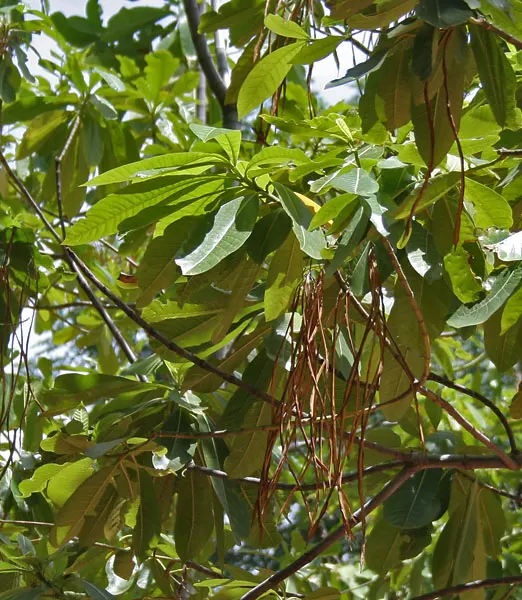
Photo: J.M.Garg, CC BY-SA 3.0 (via Wikimedia Commons)
Hard Alstonia
Alstonia macrophylla
Also known as Hard Alstonia, Batino, White Cheesewood, Pulai Basong, Palimara Alstonia
Key benefits
✦Traditional uses
✦Long before it had a Latin name, this towering rainforest giant was known to healers across India, Sri Lanka, Myanmar, and the Malay Peninsula as a bitter bark worth respecting. Communities steeped its inner bark to break fevers and to treat malaria and dysentery, following the same bitter-tonic logic that made its close relative Alstonia scholaris famous as the saptaparna of Ayurvedic tradition. The leaves and bark also found their way into folk remedies for persistent coughs and asthma, valued for their sharp, cooling bitterness. Its pale, lightweight wood, meanwhile, had a far gentler reputation, prized for pencils, matchboxes, and packing crates, and the living tree itself was often left standing along riverbanks and roadsides simply for the deep shade of its whorled, glossy leaves.
How to grow & use it
✦The full apothecary for Hard Alstonia
Traditional remedies and step-by-step preparations, a complete growing guide, and how to harvest, dry, and store it, all unlocked with HerbLens Unlimited.
- ✦Remedies & preparations
- ✦ Growing guide
- ✦Harvest & storage
From under $6 a month. Free plant identifications always included.
- ✦Neem
- ✦Andrographis (kalmegh)
- ✦Ginger
- ✦Cinchona bark
- ✦Andrographis
“For the hushed, buttressed giant standing watch at the river's edge, storied in bark it was never wise to take lightly.”
The genus Alstonia honors Charles Alston, an eighteenth-century Scottish botanist and physician who classified plants from his post in Edinburgh and never once set foot beneath the towering rainforest canopies where his namesake tree actually grows.
This plant's bark, leaves, and latex contain potent alkaloids that act on the heart and nervous system, and improperly prepared bark has caused serious toxicity including irregular heartbeat. It should never be self-prepared or given to children, and should be avoided during pregnancy, breastfeeding, and alongside heart, blood pressure, or sedative medications.