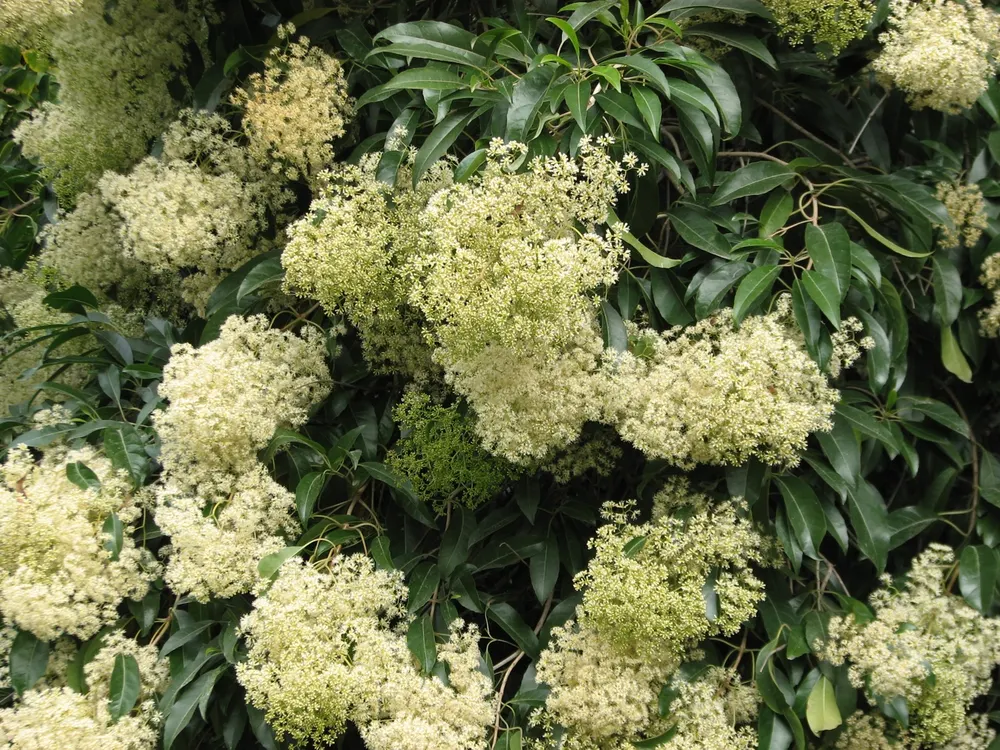
Photo: Melburnian, CC BY 3.0 (via Wikimedia Commons)
Forest Elder
Nuxia floribunda
Also known as White Elder, Wild Elder, Common Nuxia, Vlier (Afrikaans)
Key benefits
✦Traditional uses
✦Long before it had a Latin name, forest elder was simply part of the forest, a tall, fragrant presence along the shaded streams and cool ridgelines of the Afromontane belt. In the villages that grew up at the forest's edge, from the Cape through East Africa to the Ethiopian highlands, its pale, close-grained wood was cut for tool handles, fencing, and small building work, valued for being workable yet sturdy. Traditional healers across parts of its range have made occasional use of the bark, though this practice is not well documented or standardized, and it has never held the prominence of better known African medicinal trees. Its truest legacy is as a forest citizen, a pioneer species that helps stitch cleared ground back into woodland and a magnet for bees when it flowers.
How to grow & use it
✦The full apothecary for Forest Elder
Traditional remedies and step-by-step preparations, a complete growing guide, and how to harvest, dry, and store it, all unlocked with HerbLens Unlimited.
- ✦Remedies & preparations
- ✦ Growing guide
- ✦Harvest & storage
From under $6 a month. Free plant identifications always included.
- ✦Buddleja salviifolia (sagewood)
- ✦Halleria lucida (tree fuchsia)
- ✦Podocarpus (yellowwood)
- ✦Buddleja salviifolia
- ✦Halleria lucida
“When the forest edge turns honey sweet in late summer, forest elder has come into bloom.”
Stilbaceae, the family forest elder belongs to, is an almost entirely South African lineage of plants. Forest elder is one of the rare members that wandered far from home, its range stretching all the way north to the highlands of Ethiopia and across the Red Sea to Yemen.
Nuxia floribunda has no established history of internal use, and safety data for ingestion is lacking, so it is best treated as a garden and forestry tree rather than a remedy.