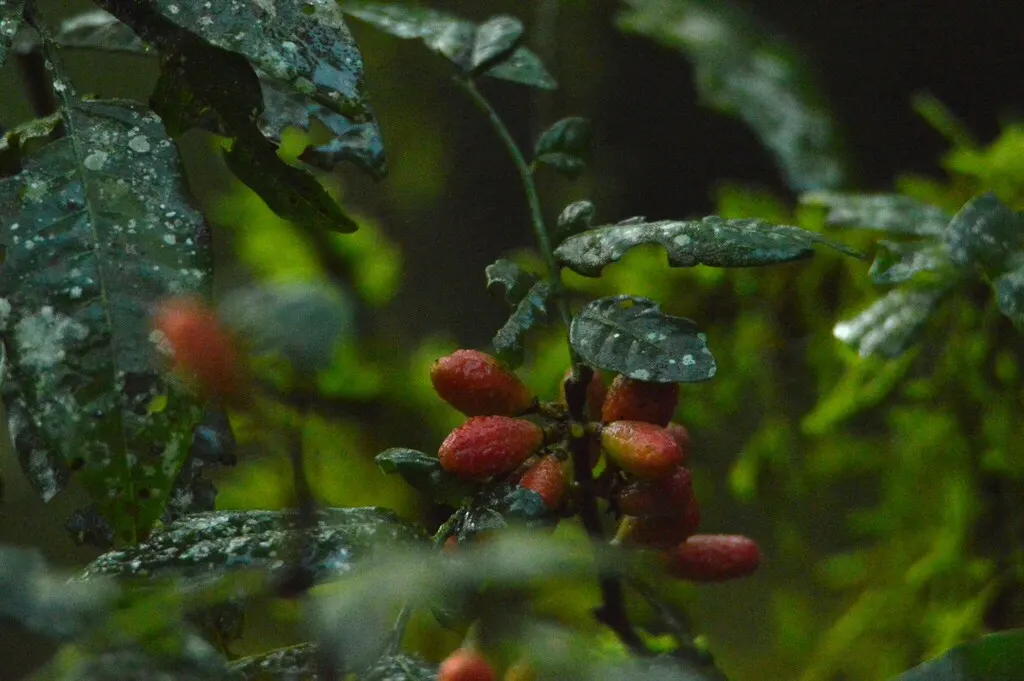
Photo: (c) Andrea Gantzer, CC BY (via iNaturalist)
Catuaba
Catuaba trichilia
Also known as Catuaba bark, Trichilia catigua, Pau de reposta, Brazilian tonic bark
Key benefits
✦Traditional uses
✦Long before catuaba bark reached health shops abroad, it was already a fixture of daily life in Brazil, where it is still simmered into a reddish tea or steeped in cachaça as a folk tonic for tiredness, low spirits, and waning desire. Indigenous communities of the Atlantic Forest are credited with first stripping the bark from this small understory tree, and Brazilian herbalists carried that knowledge forward into the tonics and bottled 'vinho de catuaba' sold in markets today. It has traditionally been used as a nerve tonic to steady the mind after long, taxing days, and as a warming aphrodisiac shared between couples. Because several unrelated Brazilian trees are sold under the single name 'catuaba,' much of this lore has traveled together as one shared tradition rather than being tied to one botanical source alone.
How to grow & use it
✦The full apothecary for Catuaba
Traditional remedies and step-by-step preparations, a complete growing guide, and how to harvest, dry, and store it, all unlocked with HerbLens Unlimited.
- ✦Remedies & preparations
- ✦ Growing guide
- ✦Harvest & storage
From under $6 a month. Free plant identifications always included.
- ✦Muira puama
- ✦Guarana
- ✦Damiana
- ✦Muira puama
- ✦Maca
“You want an old Brazilian forest tonic for waning energy and a tired spirit, not a quick jolt but a slow return of warmth.”
The name catuaba comes from the Tupi language of Brazil, and folklore holds that when an elderly Tupi chief fathered a child late in life, his people credited the bark tea he drank, a story still told over glasses of vinho de catuaba today.
Catuaba bark is a mild stimulant, so it's traditionally avoided late in the day and combined cautiously with caffeine or sedative medications. Several different, unrelated trees are sold under the name catuaba, so the exact plant in any product isn't always certain.