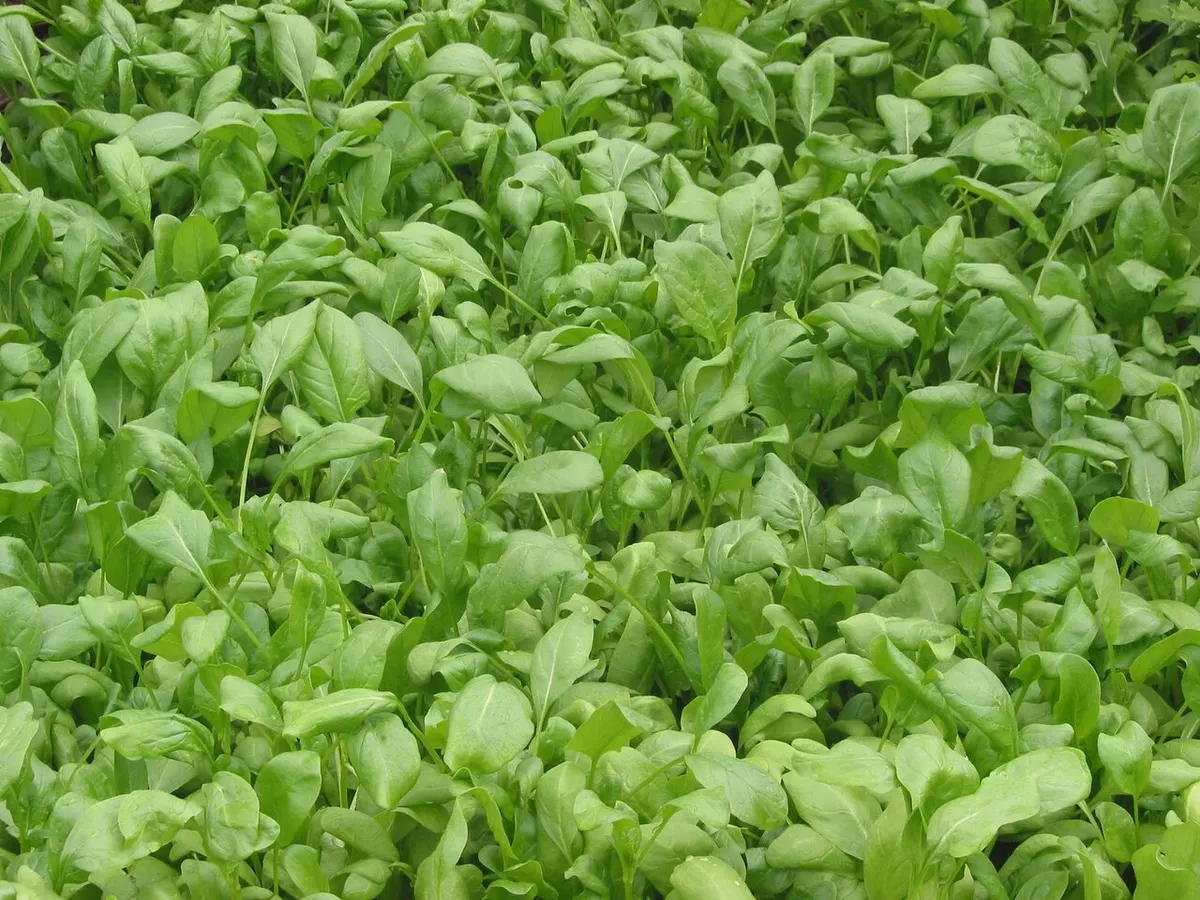
Photo: Rasbak, CC BY-SA 3.0 (via Wikimedia Commons)
Spinach
Spinacia oleracea
Also known as Garden Spinach, Persian Spinach, Spinach Beet (regional)
Key benefits
✦Traditional uses
✦Spinach traveled a long road from its likely origins in ancient Persia, carried along trade routes into China by the seventh century and later into Europe through Moorish Spain, where it earned the old name Spanish herb. Cooks and households across these regions came to prize it as a humble, nourishing green, one of the first tender leaves of spring and a reliable staple through lean seasons. In traditional kitchen and folk practice, it was valued as a strengthening food for those recovering from illness or fatigue, prized for its deep color and the vitality it seemed to lend the table. Generations of home cooks folded it into soups, pies, and simple wilted dishes as an easy, everyday way to eat well.
How to grow & use it
✦The full apothecary for Spinach
Traditional remedies and step-by-step preparations, a complete growing guide, and how to harvest, dry, and store it, all unlocked with HerbLens Unlimited.
- ✦Remedies & preparations
- ✦ Growing guide
- ✦Harvest & storage
From under $6 a month. Free plant identifications always included.
- ✦Nettle
- ✦Dandelion greens
- ✦Lemon balm
- ✦Swiss chard
- ✦Beet greens
“You want a tender green that gives back more than it asks, quick to the pot and quicker still to the heart.”
Spinach's reputation as a strength-giving food owes less to any Persian farmer and more to a 1930s cartoon sailor. The Popeye craze is often credited with a real, measurable bump in American spinach consumption, even though the iron figure that supposedly inspired it was later traced to a decimal-point error in old nutrition tables.
Spinach is a safe, common food, but its oxalates warrant moderation for those prone to kidney stones. Its vitamin K content can interact with blood thinners like warfarin, and very large amounts may affect thyroid function in sensitive people, though this is rare with normal cooked servings.