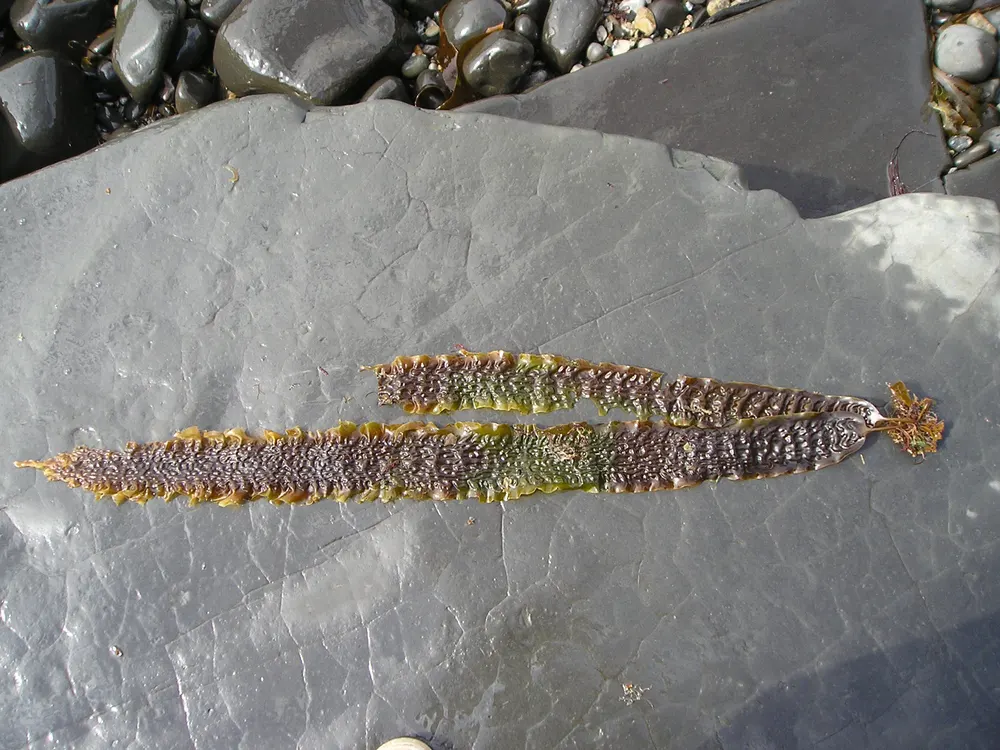
Photo: Cwmhiraeth, CC BY-SA 3.0 (via Wikimedia Commons)
Sugar Kelp
Saccharina latissima
Also known as Sugar Kelp, Sea Belt, Devil's Apron, Sugar Wrack, Atlantic Kombu
Key benefits
✦Traditional uses
✦Along the rocky shores of the North Atlantic, from Norway to Scotland to New England, coastal families have gathered sugar kelp for generations, drying it in ropes on fences and rooflines to see them through winter. It was eaten as a vegetable, worked into broths and stews, fed to livestock, and dug into thin coastal soil as fertilizer when little else would grow. Long before iodized salt reached inland kitchens, seaweeds like this one were the quiet, dependable source of iodine for people living by the sea, and it has traditionally been used to support a healthy thyroid and to address the swelling of the neck once known simply as goiter. In Japan and along the Pacific coast, close relatives of this kelp became the foundation of dashi, the savory broth beneath so much of that cuisine.
How to grow & use it
✦The full apothecary for Sugar Kelp
Traditional remedies and step-by-step preparations, a complete growing guide, and how to harvest, dry, and store it, all unlocked with HerbLens Unlimited.
- ✦Remedies & preparations
- ✦ Growing guide
- ✦Harvest & storage
From under $6 a month. Free plant identifications always included.
- ✦Dulse
- ✦Nettle
- ✦Ginger
- ✦Kombu (Saccharina japonica)
- ✦Bladderwrack
“For the mineral hush of the tide, and a broth with roots older than written recipes.”
The white, faintly sweet crust that forms on dried sugar kelp is mannitol, a natural sugar alcohol, and it is the very thing that earned this kelp its common name, since foragers along the shore would break off a dried strip and find it tasted faintly sweet.
Sugar kelp is very high in iodine and can affect thyroid function with frequent heavy use, especially for those with thyroid conditions. It's best avoided in large amounts during pregnancy, since a developing thyroid is sensitive to iodine excess. It can also concentrate arsenic from seawater, so use modest amounts from a tested source, and those on blood-thinning medication should note its vitamin K content.