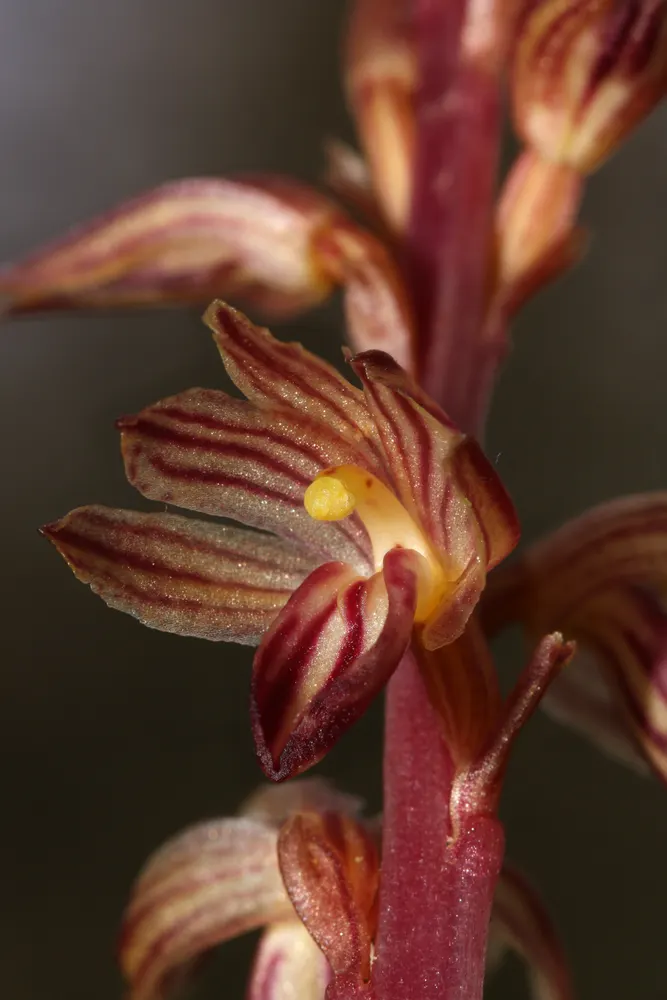
Photo: Walter Siegmund (talk), CC BY-SA 3.0 (via Wikimedia Commons)
Striped Coralroot
Corallorhiza striata
Also known as Striped Coral-root, Chicken-toe Orchid
Key benefits
✦Traditional uses
✦Striped coralroot is one of those plants that earns its keep by being strange rather than useful. It carries no green leaves and makes no chlorophyll of its own, instead tapping into the underground fungal threads that also feed the surrounding trees, a trick botanists call mycoheterotrophy. Because of this unusual biology, it never entered the herbalist's cabinet the way its greener cousins did, and there is no well-documented tradition of it being brewed, poulticed, or eaten. What history it does have belongs mostly to careful botanists and foragers who prize the thrill of spotting its maroon-striped spikes rising like a small ghost from the forest floor. A few related coralroot species carried scattered, poorly recorded folk uses among some Native American communities, but striped coralroot itself was mostly left alone, admired rather than gathered.
How to grow & use it
✦The full apothecary for Striped Coralroot
Traditional remedies and step-by-step preparations, a complete growing guide, and how to harvest, dry, and store it, all unlocked with HerbLens Unlimited.
- ✦Remedies & preparations
- ✦ Growing guide
- ✦Harvest & storage
From under $6 a month. Free plant identifications always included.
“For the hush of finding a wildflower that never once needed sunlight to bloom.”
Striped coralroot has no leaves and no chlorophyll at all. Instead of photosynthesizing, it quietly taps into the mycorrhizal fungi that also nourish nearby trees, essentially living off borrowed sugars from the forest around it, a strategy scientists call mycoheterotrophy.
This orchid has no history of food or medicinal use and no established safe dose, so it should not be eaten. It survives only through a delicate relationship with underground fungi, so digging it up typically kills it and disturbs the surrounding forest network.