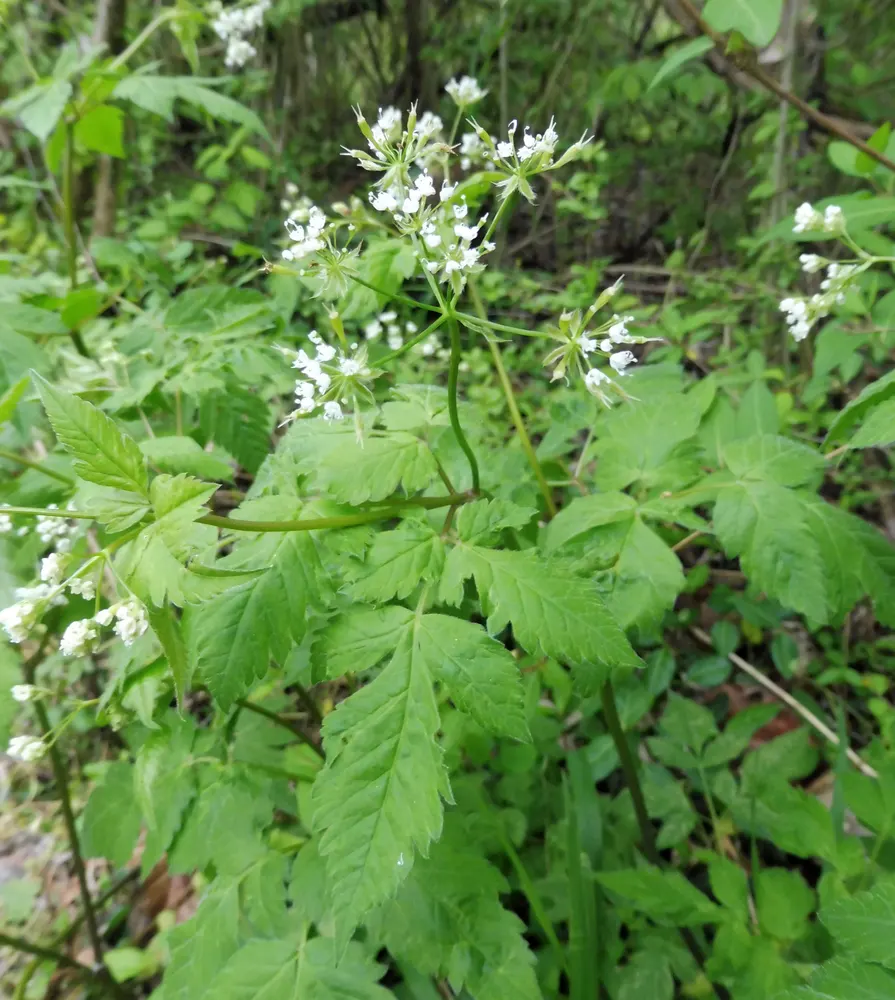
Photo: Mason Brock (Masebrock), Public domain (via Wikimedia Commons)
Aniseroot
Osmorhiza longistylis
Also known as Longstyle Sweetroot, Smooth Sweet Cicely, American Sweet Cicely, Anise Root
Key benefits
✦Traditional uses
✦Long before it had a Latin name, aniseroot was a familiar plant to the woodland peoples of the eastern forests, who dug its thick, licorice-scented root as both food and medicine. Several Native American nations, including the Iroquois and Meskwaki, chewed or brewed the root to settle an upset stomach, ease coughs, and take the edge off other, harsher-tasting medicines. Early homesteaders adopted the same root as a wild substitute for anise and licorice in the kitchen, tucking it into pies, cordials, and simmering pots. Its sweetness made it as much a comfort plant as a medicinal one, the kind of root a forest walker learned to recognize by scent alone.
How to grow & use it
✦The full apothecary for Aniseroot
Traditional remedies and step-by-step preparations, a complete growing guide, and how to harvest, dry, and store it, all unlocked with HerbLens Unlimited.
- ✦Remedies & preparations
- ✦ Growing guide
- ✦Harvest & storage
From under $6 a month. Free plant identifications always included.
- ✦Chamomile
- ✦Licorice root
- ✦Fresh mint
- ✦Anise seed
- ✦Fennel seed
“For the sweet, licorice-bright breath of the forest floor in early spring.”
Crush a piece of aniseroot's root or leaf between your fingers and it releases an unmistakable licorice-anise perfume, a trait early botanists relied on to tell it apart from its far more dangerous Apiaceae cousins.
Belongs to the carrot family, which includes deadly lookalikes like poison hemlock and water hemlock, so it should only be gathered by someone who can identify it with certainty, ideally by its distinct anise scent. It is generally regarded as food-safe when correctly identified, though best avoided during pregnancy and nursing.