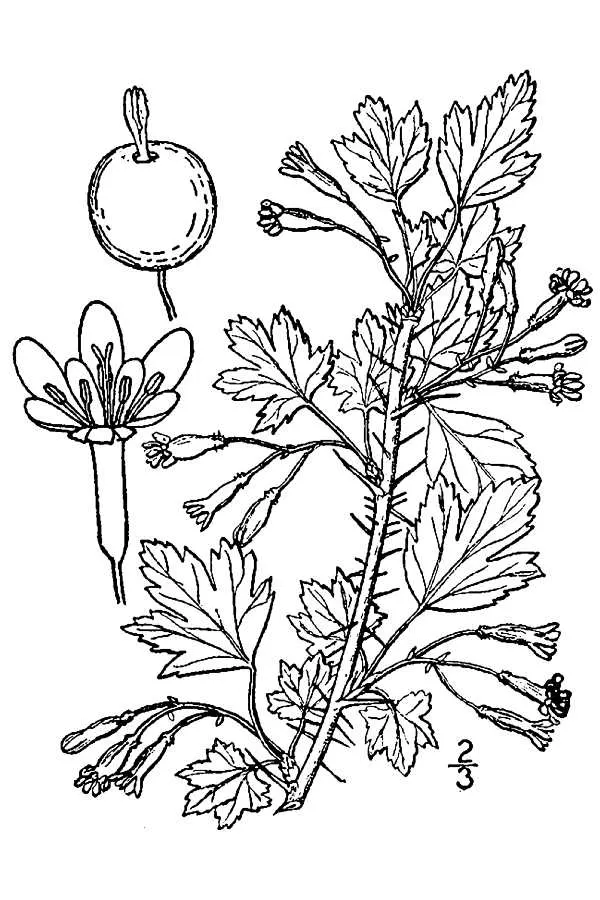
Photo: Britton, N.L., and A. Brown. 1913. An illustrated flora of the northern United States, Canada and the British Possessions. 3 vols. Charles Scribner's Sons, New York. Vol. 2: 240. Courtesy of Kentucky Native Plant Society. Scanned by Omnitek Inc., Public domain (via Wikimedia Commons)
Northern Gooseberry
Ribes oxyacanthoides
Also known as Canadian Gooseberry, Northern Wild Gooseberry, Swamp Gooseberry
Key benefits
✦Traditional uses
✦Long before orchards spread across the continent, Northern Gooseberry grew wild along the cool woodland edges of Canada and the northern United States, and Native peoples of these regions gathered its tart berries as a valued seasonal food. The fruit was eaten fresh off the branch, dried for winter stores, and sometimes worked into pemmican alongside meat and fat to make a portable, sustaining ration. Because the berries ripen when few other fruits are available, this humble thicket shrub often served as one of the first sweet, vitamin-rich bites of late summer for families living close to the land.
How to grow & use it
✦The full apothecary for Northern Gooseberry
Traditional remedies and step-by-step preparations, a complete growing guide, and how to harvest, dry, and store it, all unlocked with HerbLens Unlimited.
- ✦Remedies & preparations
- ✦ Growing guide
- ✦Harvest & storage
From under $6 a month. Free plant identifications always included.
- ✦Rose hips
- ✦Elderberry
- ✦Wild blueberry leaf
- ✦Black currant
- ✦Wild strawberry
“When you find a thorny little shrub hung with jewel-toned berries at the edge of a northern wood, and want a taste of the wild that needs no orchard.”
In the early 1900s, wild gooseberries and currants like this one were pulled up by the thousands across northern forests, because foresters discovered they serve as an alternate host for white pine blister rust, a fungus that was devastating valuable timber stands.
Northern gooseberry's ripe berries are safe to eat in ordinary amounts, though unripe or overripe berries can cause mild stomach upset if eaten in quantity.