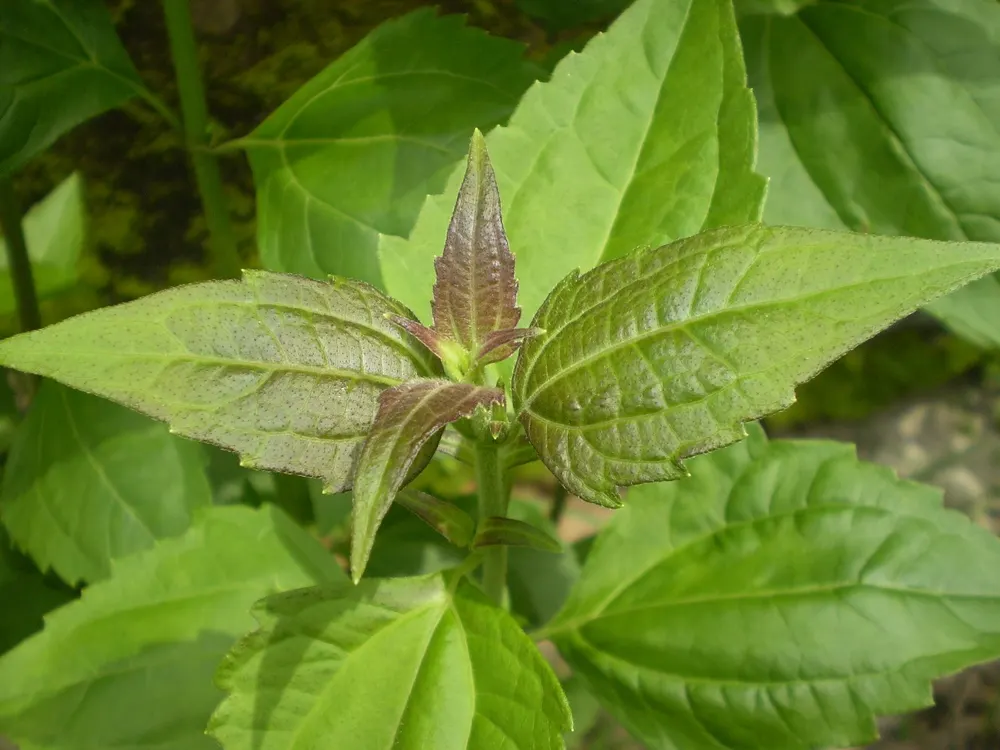
Photo: Ashasathees, Public domain (via Wikimedia Commons)
Siam Weed
Chromolaena odorata
Also known as Siam Weed, Bitter Bush, Christmas Bush, Jack-in-the-Bush, Triffid Weed
Key benefits
✦Traditional uses
✦Chromolaena odorata began its life in the warm scrublands of the Americas, from Florida down through the Caribbean and Mexico, but it is in West Africa and Southeast Asia where the plant found its true reputation. Carried abroad in the twentieth century, it spread so quickly along cleared roads and farmland that it earned local names tied to the pace of its arrival, and village healers soon noticed that its crushed leaves, pressed onto a fresh cut, seemed to slow the bleeding and keep the wound clean. That single, practical trick, a farmer's plant for a farmer's injuries, made it one of the most reached-for roadside remedies in the regions it now calls home, even as botanists and land managers regard it warily as one of the world's most aggressive invasive weeds.
How to grow & use it
✦The full apothecary for Siam Weed
Traditional remedies and step-by-step preparations, a complete growing guide, and how to harvest, dry, and store it, all unlocked with HerbLens Unlimited.
- ✦Remedies & preparations
- ✦ Growing guide
- ✦Harvest & storage
From under $6 a month. Free plant identifications always included.
- ✦Plantain leaf
- ✦Yarrow
- ✦Calendula
- ✦Yarrow
- ✦Plantain leaf
“When a scrape needs an old field trick, this is the leaf farmers have reached for and crushed onto cuts for generations.”
In parts of Nigeria the plant is nicknamed Awolowo weed, after the statesman Obafemi Awolowo, because the two seemed to spread across the region at the very same time, the plant's rapid colonization of cleared land keeping pace with his rise in politics during the 1950s.
Siam weed should never be taken internally: livestock that graze on it have developed liver damage, and its safety for humans has never been established. It is also a highly invasive weed that is illegal to cultivate or spread in many places, and any topical use should be limited to small, clean scrapes, never open or deep wounds.