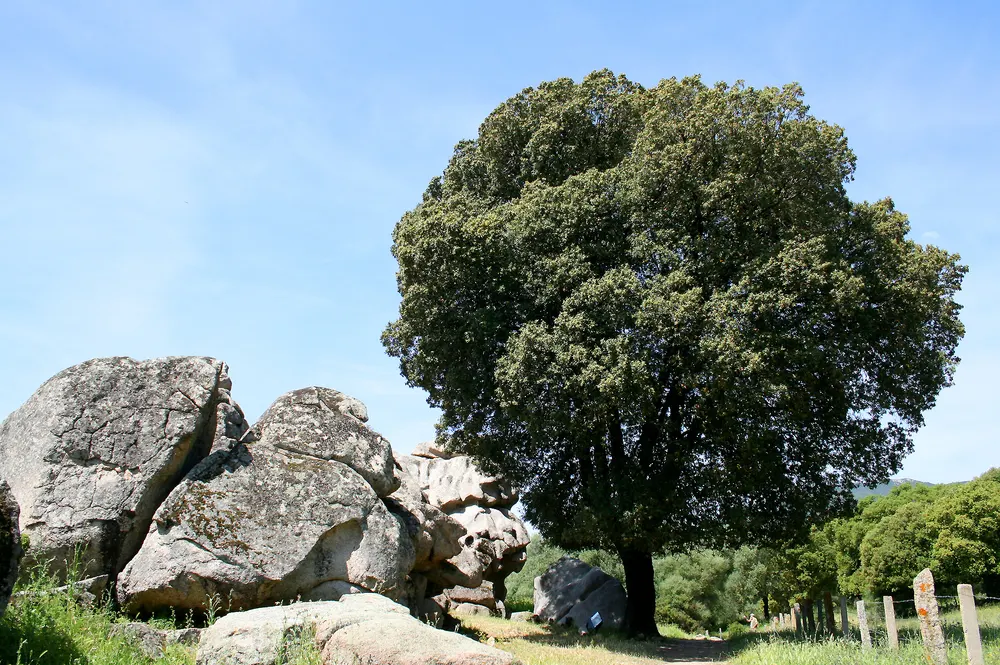
Photo: Jean-Pol GRANDMONT, CC BY 3.0 (via Wikimedia Commons)
Holm Oak
Quercus ilex
Also known as Evergreen Oak, Holly Oak, Encina, Ilex Oak
Key benefits
✦Traditional uses
✦Long before it shaded pilgrims and shepherds across Spain, Italy, and Provence, the holm oak was already a fixture of Mediterranean life, its dense evergreen canopy offering shelter through every season and its acorns sweet enough, once leached of their bitterness, to be ground into a rustic flour during lean harvest years. Herbalists across the region turned to its tannin-rich bark much as northern healers turned to white oak, steeping it into decoctions used as a gargle for sore throats and a wash for minor skin troubles, valuing its firm, drawing, astringent quality. The tree itself became a quiet symbol of endurance, standing green through winters that stripped its neighbors bare, and its acorns fattened the pigs of Iberian farmsteads for generations. It is a plant known as much through the working landscape it built as through the tea kettle.
How to grow & use it
✦The full apothecary for Holm Oak
Traditional remedies and step-by-step preparations, a complete growing guide, and how to harvest, dry, and store it, all unlocked with HerbLens Unlimited.
- ✦Remedies & preparations
- ✦ Growing guide
- ✦Harvest & storage
From under $6 a month. Free plant identifications always included.
- ✦Sage
- ✦Chamomile
- ✦Thyme
- ✦White Oak bark (Quercus alba)
- ✦English Oak bark (Quercus robur)
“For the tree that keeps its green cloak through winter, and the bark that has long steadied a rough throat.”
Holm oak acorns are naturally sweeter and less bitter than those of most oaks, and in parts of Spain and Portugal they were traditionally fed to free-ranging black pigs during the autumn montanera, the fattening season that gives acorn-fed Iberian ham its distinctive nutty flavor.
Holm oak bark is high in tannins and traditionally used only in small, occasional amounts, since prolonged internal use can upset the stomach. Raw acorns are strongly astringent and should never be eaten unleached.