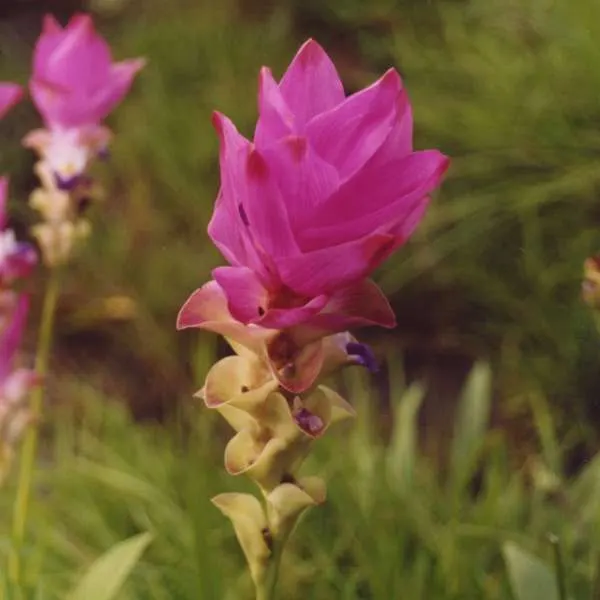
Photo: Ahoerstemeier (talk) (Uploads), CC BY-SA 3.0 (via Wikimedia Commons)
Siam Tulip
Curcuma alismatifolia
Also known as Summer Tulip, Patumma, Curcuma Tulip, Thai Tulip
Key benefits
✦Traditional uses
✦The Siam tulip is not an old apothecary herb but a beloved garden and festival flower of Thailand, Cambodia, Laos, and Myanmar, where entire hillsides bloom pink and lavender each rainy season and villagers gather to walk through the fields. In Chaiyaphum province, the wild flowering grounds are so cherished that they are protected as a national park attraction, drawing visitors every June and July just to see the color spread across the meadows. Unlike its famous relative turmeric, Curcuma alismatifolia was grown for beauty rather than for the kitchen or the medicine chest, valued in floristry, temple decoration, and home gardens for its long-lasting, tulip-like blooms. It has become a well-loved cut flower worldwide, shipped from Thai farms to markets across Asia, Europe, and North America.
How to grow & use it
✦The full apothecary for Siam Tulip
Traditional remedies and step-by-step preparations, a complete growing guide, and how to harvest, dry, and store it, all unlocked with HerbLens Unlimited.
- ✦Remedies & preparations
- ✦ Growing guide
- ✦Harvest & storage
From under $6 a month. Free plant identifications always included.
- ✦Ginger lily
- ✦Heliconia
- ✦Canna lily
- ✦Curcuma zedoaria (as a garden relative with similar habit)
“For a patch of tropical color that asks for little and gives back all summer long.”
What looks like a single tulip-shaped bloom is actually a stack of colorful bracts, modified leaves, and the true flowers are small and pale, tucked shyly between them, opening one at a time over several weeks.
Siam tulip has no history of food or medicinal use and should be treated as an ornamental plant only; keep it away from children and pets who might chew on it.