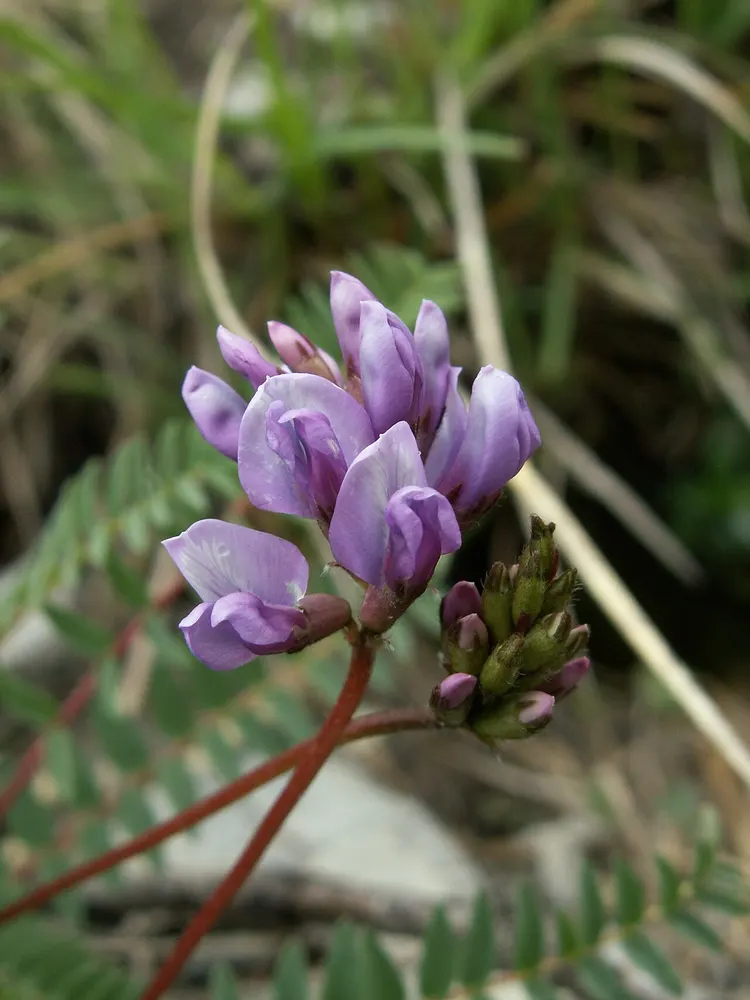
Photo: Thomas Mathis, CC BY-SA 3.0 (via Wikimedia Commons)
Mountain Oxytropis
Oxytropis montana
Also known as Mountain Locoweed, Mountain Crazyweed, Mountain Point-vetch, Alpine Oxytrope
Key benefits
✦Traditional uses
✦Mountain Oxytropis has no real tradition as a medicine or food; instead, its place in mountain history is as a plant to know and respect. Generations of shepherds, ranchers, and packers traveling high alpine trails learned to recognize its silvery, pinnate leaves and pea-like blossoms so they could steer grazing animals away from it, since a herd that develops a taste for locoweed can be difficult to keep off it afterward. Indigenous peoples of the mountain West likewise carried detailed plant knowledge that distinguished the many pea-family look-alikes of high meadows, valuing Oxytropis species chiefly as a marker of terrain and season rather than as something to gather. Today it remains most meaningful as a small, tenacious presence of the high country, part of what makes an alpine meadow feel truly wild.
How to grow & use it
✦The full apothecary for Mountain Oxytropis
Traditional remedies and step-by-step preparations, a complete growing guide, and how to harvest, dry, and store it, all unlocked with HerbLens Unlimited.
- ✦Remedies & preparations
- ✦ Growing guide
- ✦Harvest & storage
From under $6 a month. Free plant identifications always included.
“A silvery little sentinel of the high peaks, best admired at a respectful distance and left exactly where the mountain put it.”
The name locoweed comes from the Spanish word loco, meaning crazy, after ranchers in the 1800s watched cattle and horses that grazed on Oxytropis and its cousin Astragalus develop a strange, stumbling gait and erratic behavior. It took another century of research to learn the real culprit is not the plant itself but a fungus living quietly inside its tissues, producing the toxin that causes the illness.
Mountain oxytropis is a locoweed that often hosts a fungus producing swainsonine, a toxin causing serious, sometimes irreversible neurological poisoning in grazing animals. It has no history of safe human use and should never be eaten by people or given to livestock or pets.