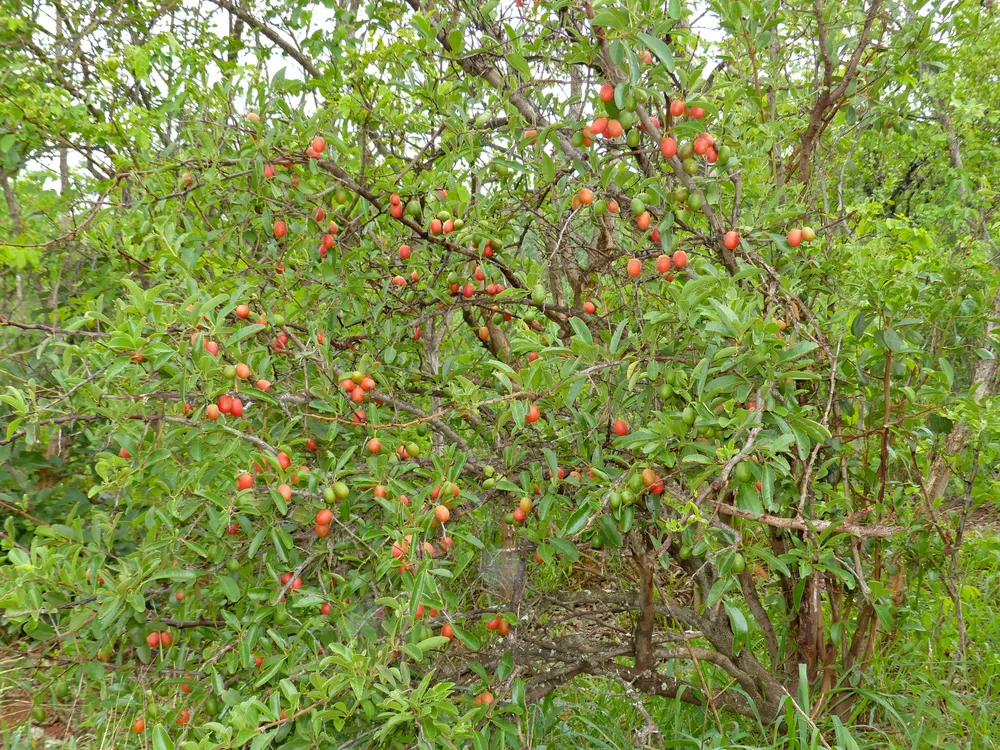
Photo: Bernard DUPONT from FRANCE, CC BY-SA 2.0 (via Wikimedia Commons)
Large Sour Plum
Ximenia caffra
Also known as Sourplum, Wild Plum, Monkey Plum, Blue Sourplum (regional name for a related species)
Key benefits
✦Traditional uses
✦Long before it had a Latin name, the large sour plum was bushveld food and medicine cabinet in one. Communities across southern and eastern Africa gathered the tart, plum-like fruit as it ripened from green to blushing red, eating it fresh, drying it, or brewing it into a traditional beer. The bark and root were traditionally simmered into decoctions used for stomach upset and as a wash for wounds and skin sores, while the leaves were chewed or crushed into poultices for the same purpose. The oily kernel, pressed rather than eaten, became a treasured skin and hair conditioner passed down through generations of San and Bantu-speaking peoples.
How to grow & use it
✦The full apothecary for Large Sour Plum
Traditional remedies and step-by-step preparations, a complete growing guide, and how to harvest, dry, and store it, all unlocked with HerbLens Unlimited.
- ✦Remedies & preparations
- ✦ Growing guide
- ✦Harvest & storage
From under $6 a month. Free plant identifications always included.
- ✦Lemongrass
- ✦Wild sage (imphepho)
- ✦Rooibos
- ✦Marula fruit (for the tart, wild-fruit character)
- ✦Baobab fruit pulp
“For the sharp, sun-warmed taste of the African bushveld itself, tart, wild, and unmistakably alive.”
In parts of Namibia and Angola, the oil pressed from ximenia kernels has been used for generations to protect skin from harsh sun and wind, a tradition that quietly inspired today's interest in 'ximenia oil' as a prized ingredient in natural cosmetics.
Don't chew or swallow the seed kernel, which can carry compounds similar to other stone-fruit pits; only the ripe flesh is eaten, and the kernel is instead pressed for oil. Bark and root preparations are strong, unstudied medicine best avoided in pregnancy and breastfeeding.