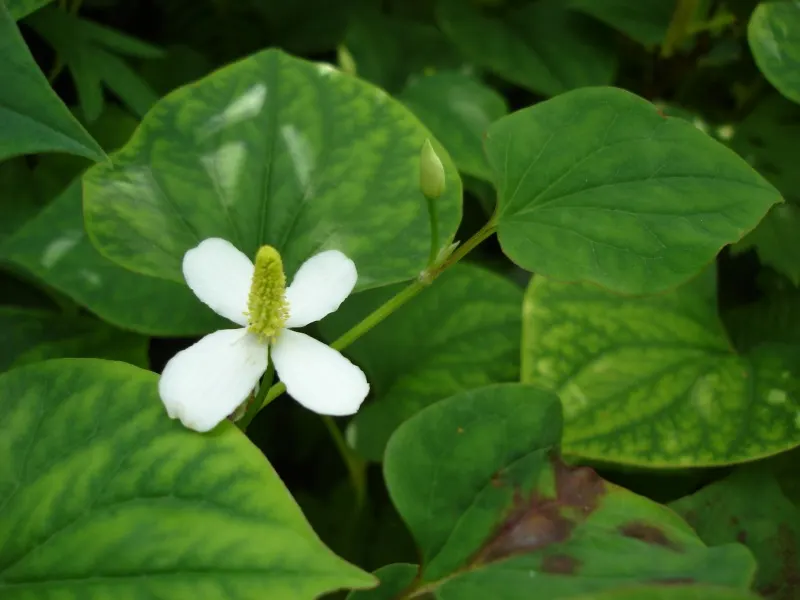
Photo: CC BY-SA 3.0 (via Wikimedia Commons)
Fish Mint
Houttuynia cordata
Also known as Chameleon Plant, Heartleaf, Fish Wort, Rainbow Plant, Dokudami
Key benefits
✦Traditional uses
✦Long before it appeared in any garden catalog, fish mint was growing wild in the damp lowlands of Vietnam, southern China, Korea, and Japan, where cooks and healers treated it as one and the same plant. In traditional Chinese medicine it is called yu xing cao, the fish-smell herb, and has been used for generations to help clear heat and toxins from the body, particularly around the lungs, and to support the skin during minor irritations. In Vietnam it is rau diep ca, a everyday table herb eaten raw alongside noodles and grilled meats, valued as much for cooling the body in hot weather as for its bracing flavor. Korean and Japanese herbalists have likewise dried the leaves for centuries into a humble household tea, dokudami-cha, brewed simply to support digestion and everyday wellness.
How to grow & use it
✦The full apothecary for Fish Mint
Traditional remedies and step-by-step preparations, a complete growing guide, and how to harvest, dry, and store it, all unlocked with HerbLens Unlimited.
- ✦Remedies & preparations
- ✦ Growing guide
- ✦Harvest & storage
From under $6 a month. Free plant identifications always included.
- ✦Mint
- ✦Cilantro
- ✦Lemongrass
- ✦Cilantro
- ✦Perilla leaf
“For the herb that smells like the riverbank and tastes like it cools the whole body down.”
Crush a leaf between your fingers and you will understand the name at once, it releases a distinct fishy aroma, which is exactly why Vietnamese cooks prize it as the herb that makes fish and meat dishes taste cleaner and brighter.
Fish mint is generally fine as a food, though large amounts can cause mild stomach upset in some people. Those taking blood pressure or immune-suppressing medications should be mindful of its physiological effects.