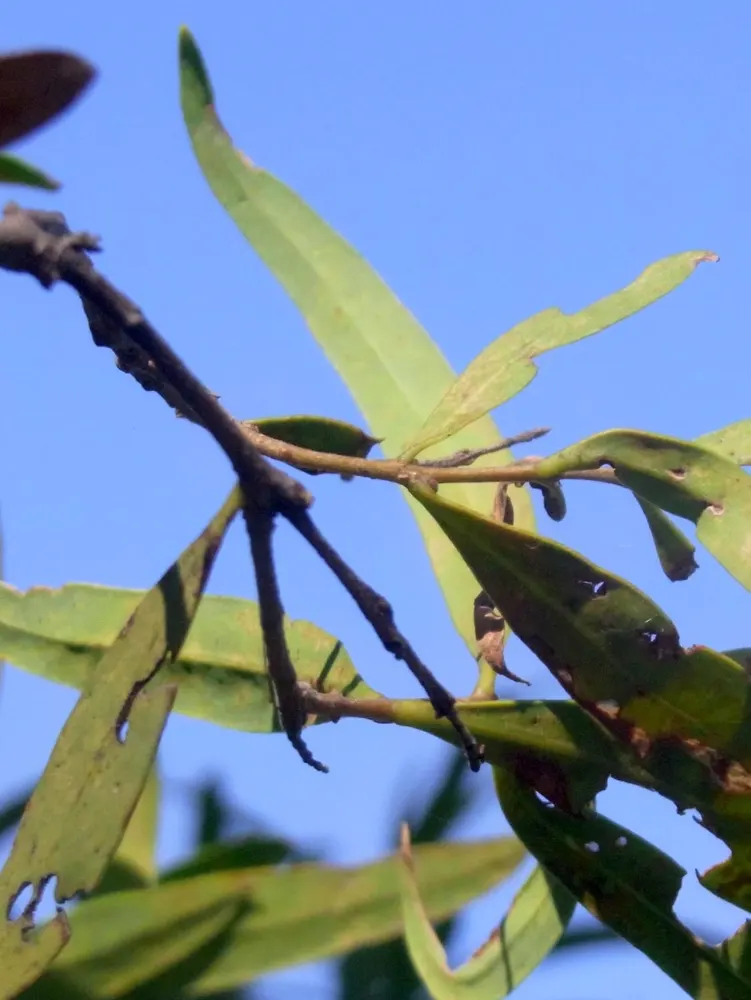
Photo: Poyt448 Peter Woodard, CC0 (via Wikimedia Commons)
Native Olive
Notelaea microcarpa
Also known as Australian Olive, Small-fruited Notelaea, Northern Olive
Key benefits
✦Traditional uses
✦Notelaea microcarpa earned the name Native Olive simply because its small, dark, fleshy drupes look so much like true olives, even though the two plants only share a family tree rather than a table. It belongs to the Oleaceae, the same botanical family as the Mediterranean olive, but unlike its famous cousin it never developed a strong tradition as a food, oil, or medicine crop. What it has earned instead is a quieter, longer-standing role in the bush itself, as a tough, reliable understorey and margin shrub that birds have relied on for its fruit for a very long time. Today it is valued mostly by native plant growers and land regenerators rather than by herbalists, prized for its resilience rather than any remedy.
How to grow & use it
✦The full apothecary for Native Olive
Traditional remedies and step-by-step preparations, a complete growing guide, and how to harvest, dry, and store it, all unlocked with HerbLens Unlimited.
- ✦Remedies & preparations
- ✦ Growing guide
- ✦Harvest & storage
From under $6 a month. Free plant identifications always included.
- ✦Lilly Pilly
- ✦Native Frangipani
- ✦Brush Box
- ✦Native Elderberry
- ✦Sweet Pittosporum
“When you want a tough native hedge that quietly feeds the birds long after its small spring flowers have gone.”
The genus name Notelaea comes from the Greek notos, meaning southern, and elaia, meaning olive, so it literally translates to southern olive, a nod to how strongly its fruit echoes the true olive of the Mediterranean despite the two plants growing continents apart.
Native olive's small fruit is bitter and unpalatable, and the plant has no established food or medicinal use, so it is not eaten.