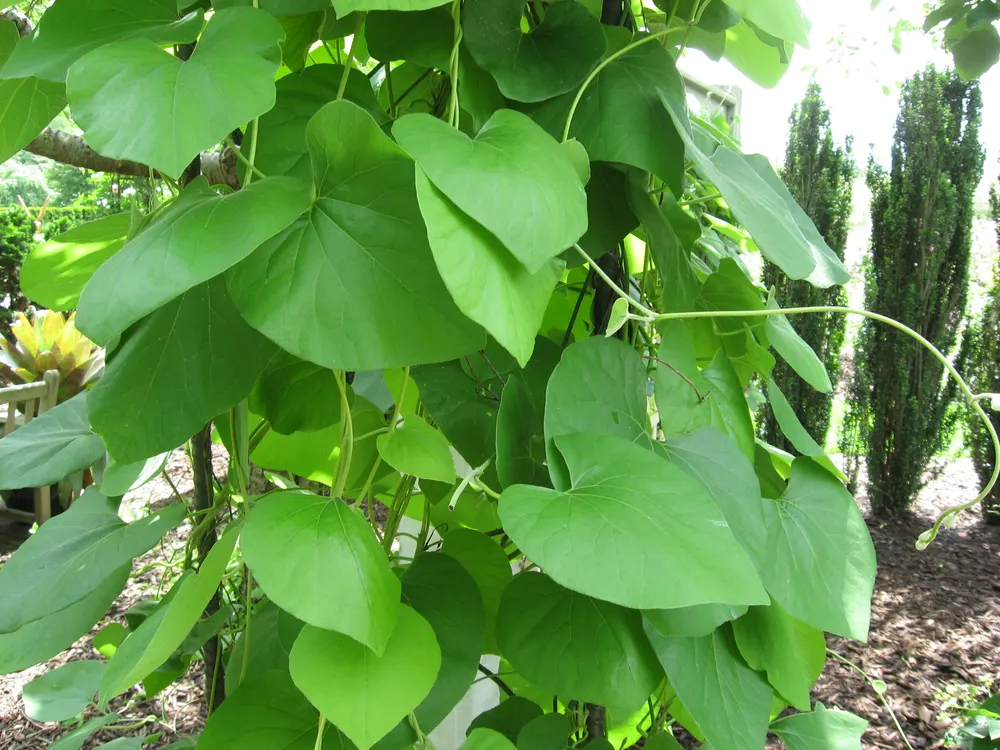
Photo: Chhe (talk), Public domain (via Wikimedia Commons)
Woolly Dutchman's Pipe
Aristolochia tomentosa
Also known as Woolly Pipevine, Pipevine, Dutchman's Pipe
Key benefits
✦Traditional uses
✦For centuries, various Aristolochia species were reached for in folk and traditional medicine around the world, their very name (from the Greek for 'best delivery') hinting at an old association with childbirth and wound care. Woolly Dutchman's Pipe itself was noted by early botanists more for its curious pipe-shaped blooms and shade-giving vigor than for any settled medicinal use. Modern research has since shown that the whole Aristolochia genus carries a compound called aristolochic acid, and that history of use has been firmly set aside as our understanding of its dangers grew. Today this vine earns its keep in gardens for a very different reason, as the essential host plant for pipevine swallowtail butterflies.
How to grow & use it
✦The full apothecary for Woolly Dutchman's Pipe
Traditional remedies and step-by-step preparations, a complete growing guide, and how to harvest, dry, and store it, all unlocked with HerbLens Unlimited.
- ✦Remedies & preparations
- ✦ Growing guide
- ✦Harvest & storage
From under $6 a month. Free plant identifications always included.
“Not an herb to steep, but a vine to grow, for the shade of its leaves and the butterflies it feeds.”
Pipevine swallowtail caterpillars feed exclusively on Aristolochia vines like this one, and by eating it they absorb its bitter, toxic compounds into their own bodies, becoming poisonous to birds themselves. Even the adult butterflies keep the protection, flashing iridescent blue-black wings as a warning that they are not worth the trouble to eat.
Every part of Aristolochia tomentosa contains aristolochic acid, a compound recognized as a potent kidney toxin and a Group 1 human carcinogen. Ingesting any part of this plant, in any preparation, tea, tincture, or capsule, has been linked to irreversible kidney failure (a condition known as aristolochic acid nephropathy) and to cancers of the urinary tract, sometimes appearing years after exposure. It should never be consumed, and historical or traditional medicinal use of this genus is now understood to be unsafe rather than a use worth reviving. Pregnant women and anyone with kidney concerns should avoid all contact, and the sap may irritate sensitive skin, so gloves are sensible when pruning or handling the vine. Keep it well out of reach of children and grazing pets. Grow it strictly as an ornamental and butterfly host plant, and if ingestion is ever suspected, contact a poison control center or a qualified medical professional right away.