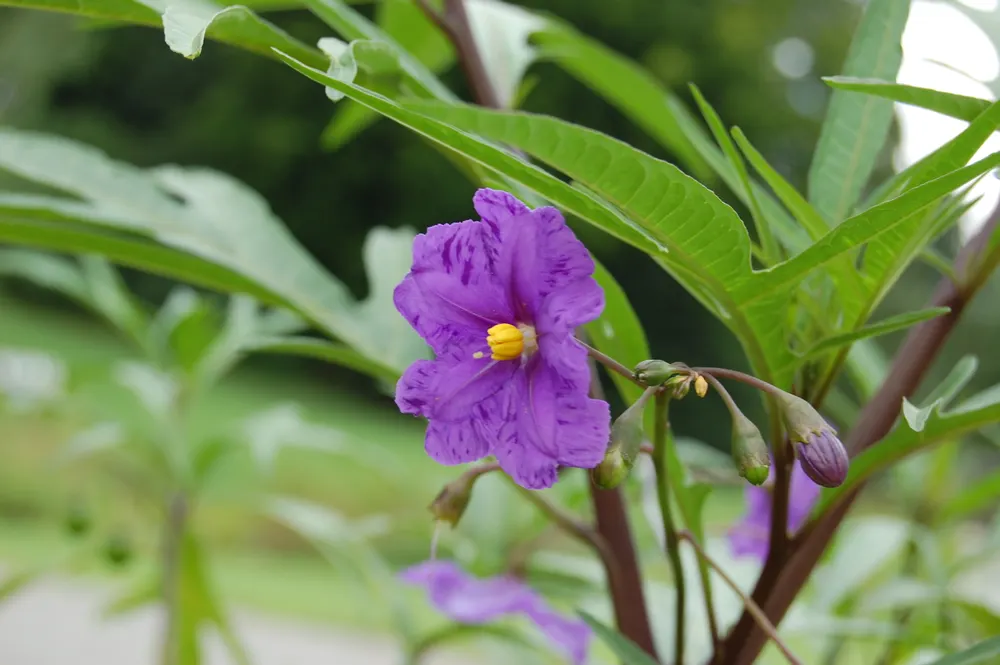
Photo: Rl, CC BY-SA 3.0 (via Wikimedia Commons)
Kangaroo Apple
Solanum laciniatum
Also known as Poroporo, New Zealand Nightshade, Gunyang
Traditional uses
✦Kangaroo apple, known as poroporo to Maori, was one of the fastest plants to spring up on cleared or burned ground across Australia and New Zealand, and it earned a reputation as a healer of the land itself long before it drew scientific attention. In the twentieth century its leaves became genuinely important to modern medicine, not as a home remedy but as an industrial source of solasodine, a compound chemists needed to synthesize cortisone and early steroid drugs. For a time New Zealand farmers grew entire fields of it under contract to pharmaceutical companies, a strange and little-known chapter where a wild nightshade helped seed the steroid industry. Traditional peoples treated the plant itself with respect and caution, valuing it more for what it could become in skilled hands than for anything to be eaten straight from the bush.
How to grow & use it
✦The full apothecary for Kangaroo Apple
Traditional remedies and step-by-step preparations, a complete growing guide, and how to harvest, dry, and store it, all unlocked with HerbLens Unlimited.
- ✦Remedies & preparations
- ✦ Growing guide
- ✦Harvest & storage
From under $6 a month. Free plant identifications always included.
“A pioneer of the scrub edge, quick to rise on bare and burned ground, its violet stars marking a landscape already mending itself.”
During the mid-1900s, New Zealand growers cultivated whole paddocks of kangaroo apple under contract to pharmaceutical companies, harvesting the leaves for solasodine, a compound used as a stepping stone in synthesizing cortisone and other early steroid medicines, making this wild nightshade an unlikely pioneer of modern pharmacology.
Every part, especially the leaves and unripe green fruit, contains toxic glycoalkaloids that cause nausea, vomiting, and abdominal pain if eaten, with more serious effects possible in larger amounts. Even ripe fruit was only ever eaten in small amounts by those experienced in judging ripeness, so keep it away from children and pets and do not use it as a home remedy.