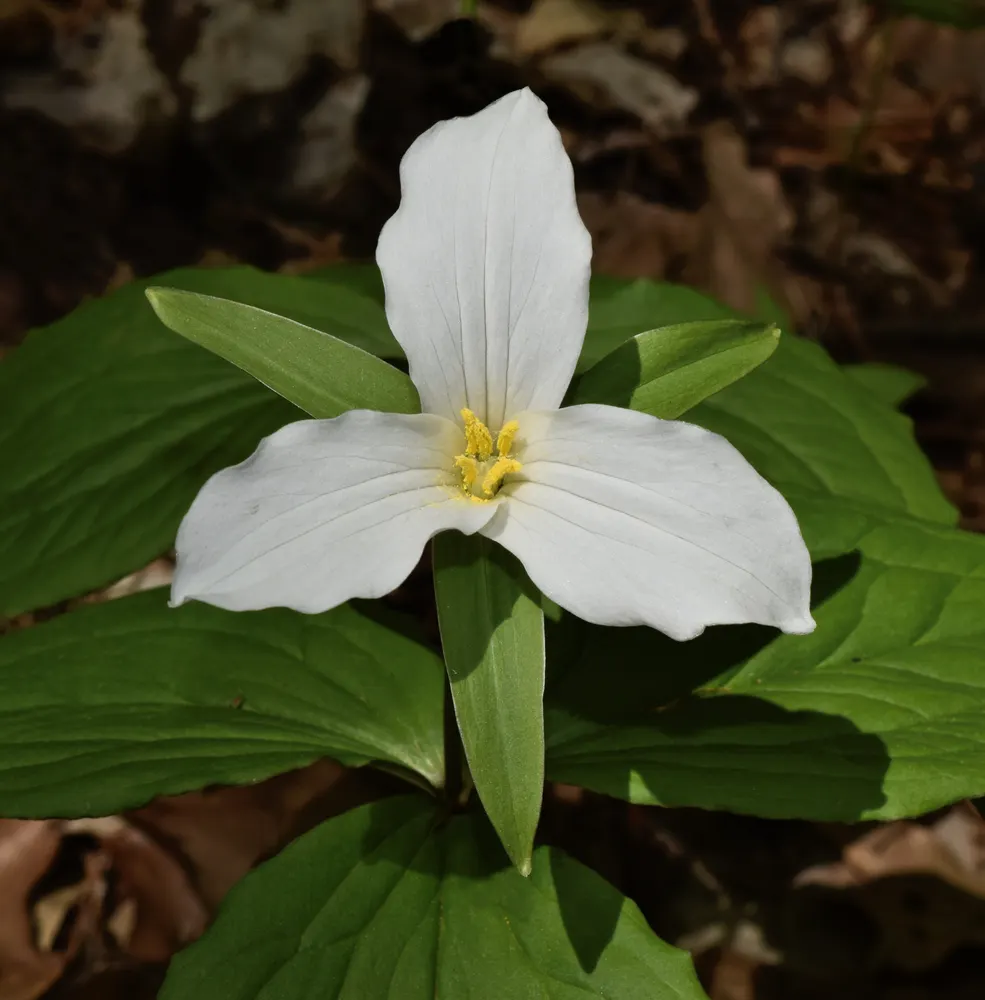
Photo: СССР, CC BY-SA 2.5 ca (via Wikimedia Commons)
Large-flowered Trillium
Trillium grandiflorum
Also known as White Trillium, Great White Trillium, Wake Robin, White Wake-Robin, Birthroot
Key benefits
✦Traditional uses
✦Long before it was a beloved garden ornamental, large-flowered trillium and its cousins were known to many Native American nations as birthroot, a name that points to the plant's traditional association with childbirth and women's health. Root preparations were also used topically, applied as a poultice to soothe skin irritations, minor wounds, and sore eyes. Because the plant is slow to mature and easily harmed by harvesting, this knowledge was always paired with restraint, a single trillium might take a decade or more to bloom, so its roots were never taken lightly.
How to grow & use it
✦The full apothecary for Large-flowered Trillium
Traditional remedies and step-by-step preparations, a complete growing guide, and how to harvest, dry, and store it, all unlocked with HerbLens Unlimited.
- ✦Remedies & preparations
- ✦ Growing guide
- ✦Harvest & storage
From under $6 a month. Free plant identifications always included.
- ✦Wild ginger
- ✦Bloodroot
- ✦Mayapple
- ✦Trillium erectum (red trillium, also historically called birthroot)
“When you want a living reminder that some of the oldest woods are still standing, and still blooming every spring.”
A large-flowered trillium can take seven to seventeen years to bloom for the first time from seed, and its seeds are dispersed largely by ants, drawn to a fatty little packet called an elaiosome attached to each one, a partnership called myrmecochory.
Large-flowered trillium contains saponins throughout the plant, and eating the leaves, root, or berries can cause nausea and vomiting. Root preparations were traditionally used to influence labor, so internal use is considered unsafe in pregnancy, and this slow-growing, at-risk woodland species is protected from harvest in many areas, so it's best admired rather than picked.