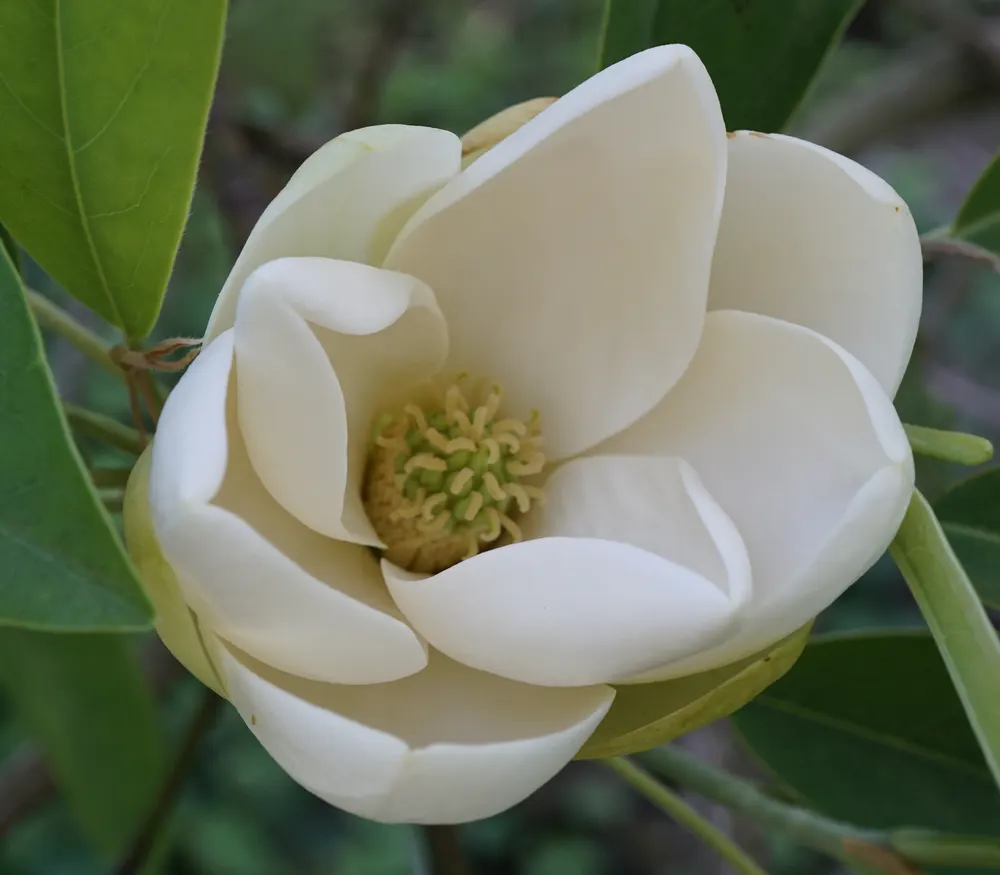
Photo: William (Ned) Friedman, CC BY-SA 4.0 (via Wikimedia Commons)
Sweetbay Magnolia
Magnolia virginiana
Also known as Swamp Magnolia, Laurel Magnolia, Beavertree, Swamp Sassafras
Key benefits
✦Traditional uses
✦Long before ornamental nurseries prized it for its lemon-scented blossoms, the aromatic bark of the sweetbay magnolia was steeped and simmered by rural Southern households as a bitter tonic to settle the stomach and stir a flagging appetite. During the Civil War, when the Union blockade cut off shipments of imported cinchona bark, Confederate field medicine turned to native magnolia barks, sweetbay among them, as a homegrown stand in for treating recurring chills and fevers. It never carried the prestige of quinine, but in swampy backcountry parishes it was often what was on hand, and what worked well enough to matter. Today it survives mostly in old herbal records and in the memory of a tree that once stood in for medicine that couldn't be gotten.
How to grow & use it
✦The full apothecary for Sweetbay Magnolia
Traditional remedies and step-by-step preparations, a complete growing guide, and how to harvest, dry, and store it, all unlocked with HerbLens Unlimited.
- ✦Remedies & preparations
- ✦ Growing guide
- ✦Harvest & storage
From under $6 a month. Free plant identifications always included.
- ✦Ginger
- ✦Chamomile
- ✦Sassafras
- ✦Magnolia officinalis bark (houpo)
- ✦Wild cherry bark
“For the swamp's own magnolia, lemon-scented and blooming quietly through the thick of a humid summer.”
Sweetbay magnolia earned the old country name beavertree because beavers seek out its soft wood and bark over almost anything else nearby, sometimes girdling whole young trees in a single season.
This tree is not known to be toxic, but bark should only be taken from pruned branches, never stripped from a living trunk.