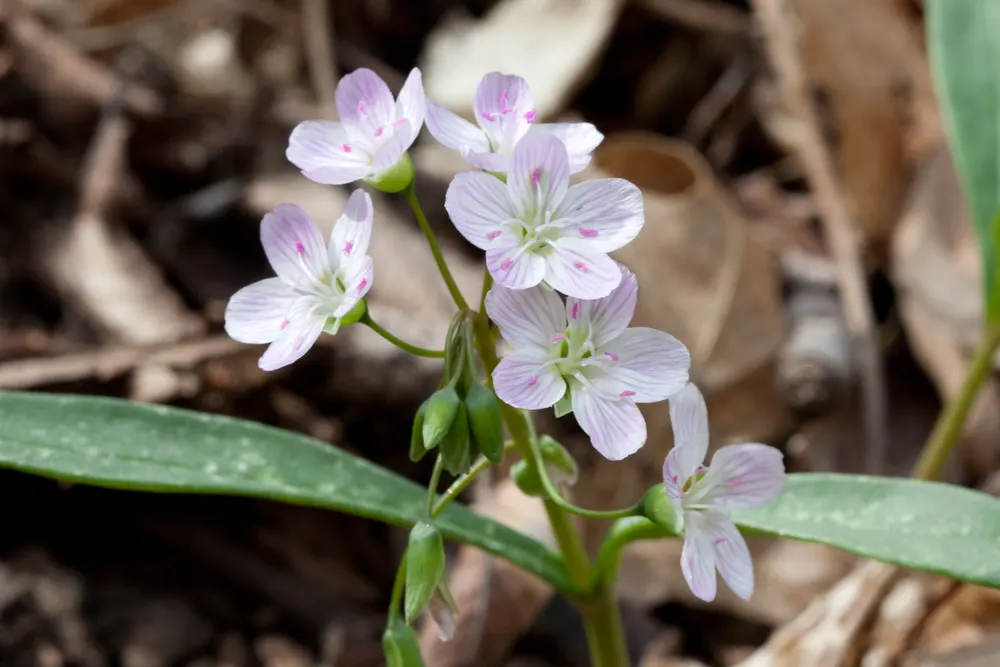
Photo: Kaldari, Public domain (via Wikimedia Commons)
Spring Beauty
Claytonia virginica
Also known as Fairy Spud, Good Morning Spring, Grass Flower, Wide-leaved Spring Beauty
Key benefits
✦Traditional uses
✦Long before grocery stores carried anything green in March, Spring Beauty was one of the first fresh foods the woods offered after a long winter. Native peoples across its range, including Algonquian and Iroquoian communities, dug the small corms in early spring and ate them raw, boiled, or roasted like tiny, sweet potatoes, and children came to know them by the affectionate name fairy spuds. Early European settlers quickly adopted the practice, gathering the corms from the same rich woodland soil where they still turn up today. The plant's real gift was never a cure so much as a welcome, a small, honest bite of nourishment arriving right when winter stores were running thin.
How to grow & use it
✦The full apothecary for Spring Beauty
Traditional remedies and step-by-step preparations, a complete growing guide, and how to harvest, dry, and store it, all unlocked with HerbLens Unlimited.
- ✦Remedies & preparations
- ✦ Growing guide
- ✦Harvest & storage
From under $6 a month. Free plant identifications always included.
- ✦Wild ramps
- ✦Violet leaves
- ✦Wood sorrel
- ✦Small new potatoes
- ✦Jerusalem artichoke
“For the tiniest, sweetest potato the winter woods will ever hand you.”
The genus Claytonia honors John Clayton, a colonial Virginia botanist who never actually described the plant himself, it was named in his honor by Carl Linnaeus in gratitude for Clayton's extensive plant collecting throughout early Virginia.
Spring beauty has a long history as a foraged wild food and isn't known to be toxic. It emerges alongside many similar-looking woodland sprouts in earliest spring, so wait for the pink-striped flowers to confirm identification, and take only a light harvest since each patch takes years to build.