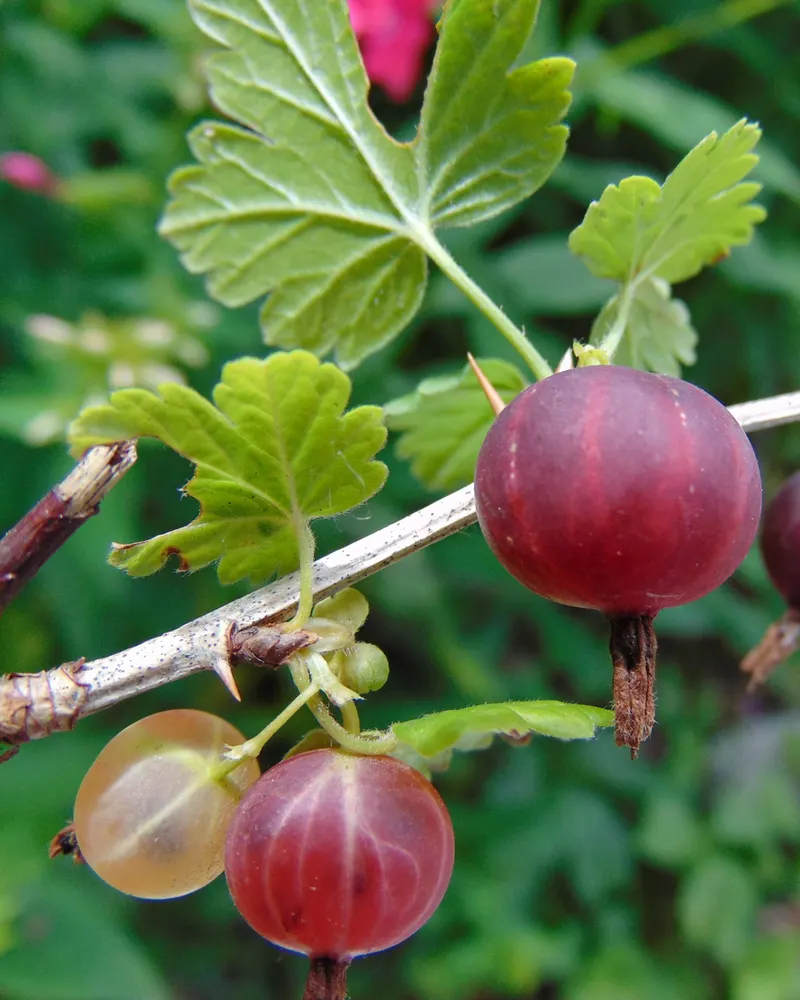
Photo: Nadiatalent, CC BY-SA 4.0 (via Wikimedia Commons)
Hairstem Gooseberry
Ribes hirtellum
Also known as Hairystem Gooseberry, Smooth Gooseberry, Canadian Gooseberry, American Gooseberry, Grossularia hirtella
Key benefits
✦Traditional uses
✦Long before it appeared in tidy garden rows, the hairstem gooseberry grew wild along the cool streambanks and rocky woods of the northern United States and Canada, where foraging families and Native communities gathered its tart little berries each summer. The fruit was prized fresh off the bramble, stirred into preserves, or dried for the lean months, and its leaves were sometimes steeped into a mild household tea. Because the berries ripen when little else does, this humble shrub earned a steady place in the pantry of anyone who lived close to the woods.
How to grow & use it
✦The full apothecary for Hairstem Gooseberry
Traditional remedies and step-by-step preparations, a complete growing guide, and how to harvest, dry, and store it, all unlocked with HerbLens Unlimited.
- ✦Remedies & preparations
- ✦ Growing guide
- ✦Harvest & storage
From under $6 a month. Free plant identifications always included.
- ✦Rosehip
- ✦Nettle
- ✦Mint
- ✦Currant (other Ribes species)
- ✦Elderberry
“When you want a tart, sun-warmed handful of berries for a pie, a jar of jam, or a forager's trailside treat.”
Wild Ribes shrubs like the hairstem gooseberry were once uprooted by the thousands in federal eradication programs, because they can host white pine blister rust, a fungus that threatened the timber industry in the early 1900s.
Ripe hairstem gooseberries are safe to eat, though unripe or green berries can cause mild stomach upset if eaten in quantity.