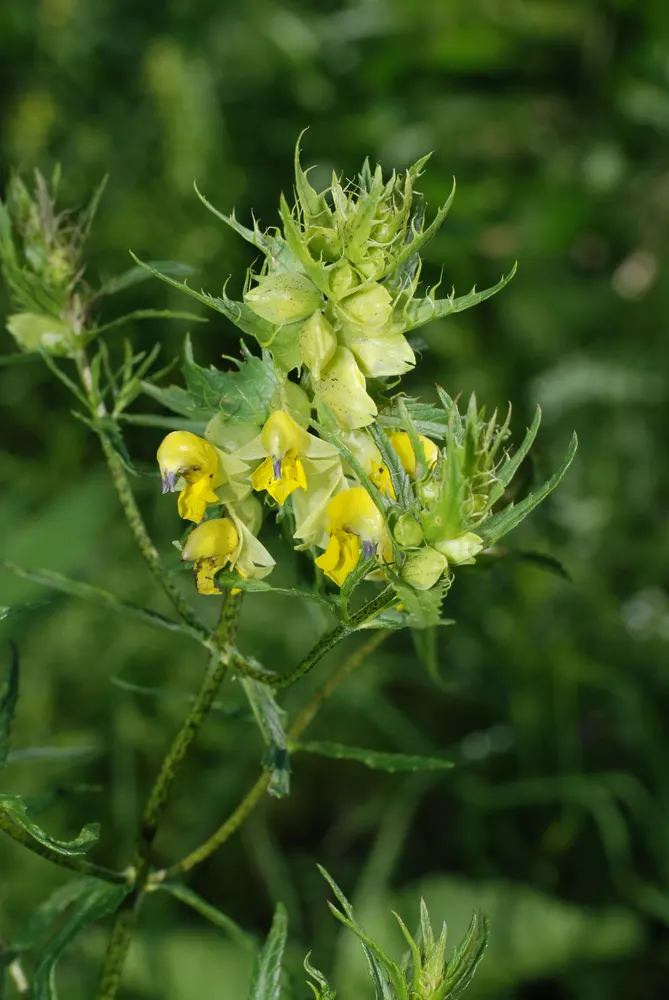
Photo: User:Tigerente, CC BY-SA 4.0 (via Wikimedia Commons)
Alpine Yellow-rattle
Rhinanthus glacialis
Also known as Glacier Yellow-rattle, Alpine Rattle, Glacier Rattlebox
Key benefits
✦Traditional uses
✦Alpine Yellow-rattle has never been a kitchen or medicine-cabinet herb. Its real legacy is agricultural: for generations, mountain farmers watched this small plant as a kind of living calendar. As its papery seed pods dried and began to rattle in the wind, it told them the hay was ready to cut, a signal passed down long before almanacs or weather reports. Botanists and meadow-keepers still prize it today for a different reason, its roots tap quietly into neighboring grasses and draw off some of their vigor, which lets slower, showier wildflowers finally get a foothold. In this way it has traditionally been regarded less as a remedy and more as a quiet gardener's ally, one that reshapes a whole meadow simply by living in it.
How to grow & use it
✦The full apothecary for Alpine Yellow-rattle
Traditional remedies and step-by-step preparations, a complete growing guide, and how to harvest, dry, and store it, all unlocked with HerbLens Unlimited.
- ✦Remedies & preparations
- ✦ Growing guide
- ✦Harvest & storage
From under $6 a month. Free plant identifications always included.
- ✦Oxeye daisy
- ✦Red clover
- ✦Sheep's fescue and other fine native grasses
- ✦Rhinanthus minor (common Yellow-rattle), a lowland cousin used the same way in meadow restoration
“For a meadow that wants to be more than grass, a little wildness let back in.”
The whole Rhinanthus family gets its common name, rattle, from the loose seeds that shake audibly inside the dry, inflated seed pod, a sound mountain hay farmers relied on for centuries as a natural signal that cutting time had arrived.
Alpine yellow-rattle has no established use as a food or medicine and should not be gathered for eating or home remedies.