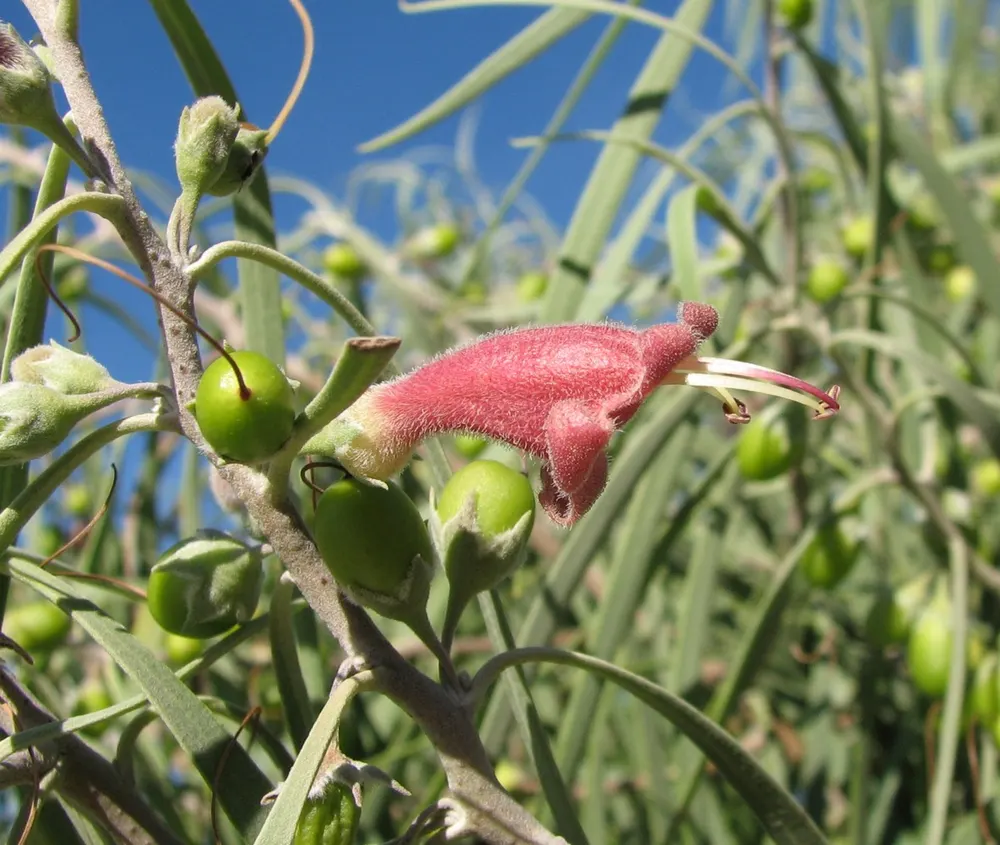
Photo: Melburnian, CC BY 2.5 (via Wikimedia Commons)
Berrigan
Eremophila longifolia
Also known as Weeping Emu Bush, Native Fuchsia, Dogwood, Emu Bush
Key benefits
✦Traditional uses
✦Berrigan is one of the most culturally significant plants of the Australian inland, long carried by Aboriginal communities across the continent's dry heart as both medicine and ceremony. Its narrow gray-green leaves were steeped into a wash used to bathe wounds, skin sores, and weary or infected eyes, and the same leaves were burned as a cleansing smoke for newborns, new mothers, and the unwell, a practice still honored in some communities today. Because of its low, weeping branches, the tree also came to hold a place in mourning and passage rites, its bowed form seen as an echo of grief itself, and its wood was fashioned into tools and coolamons. It stands as a plant of both the body and the spirit, tended by knowledge passed down for many thousands of years.
How to grow & use it
✦The full apothecary for Berrigan
Traditional remedies and step-by-step preparations, a complete growing guide, and how to harvest, dry, and store it, all unlocked with HerbLens Unlimited.
- ✦Remedies & preparations
- ✦ Growing guide
- ✦Harvest & storage
From under $6 a month. Free plant identifications always included.
- ✦Eucalyptus
- ✦Tea tree (Melaleuca)
- ✦Sandalwood
- ✦Eucalyptus leaf
- ✦Tea tree leaf
“For the old bush medicine of wound and cold, and the cleansing smoke that has drifted through the desert for generations.”
The genus name Eremophila comes from the Greek eremos, meaning desert, and philos, meaning loving, a fitting name for a plant that thrives where little else will grow, while its species name longifolia simply nods to its long, narrow leaves.
There's little modern safety data on Eremophila longifolia, and traditional use centers on external washes and ceremonial smoke rather than drinking large amounts of infusion. Several related Eremophila species are known to sicken livestock that graze on them, so it's best avoided internally by pregnant or breastfeeding women, young children, and anyone on prescription medication.