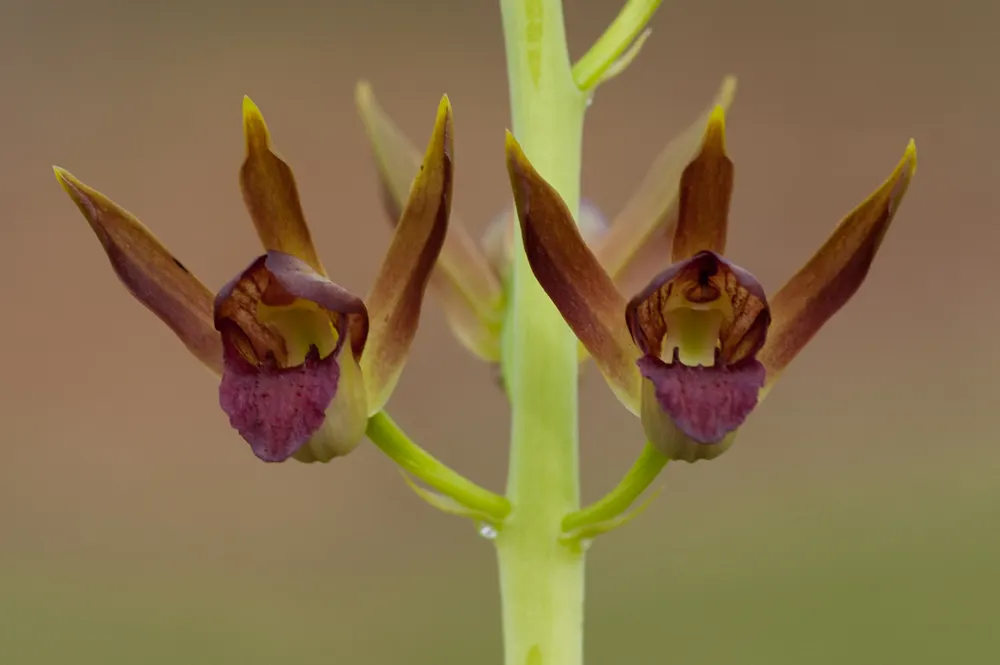
Photo: Rkitko, CC BY-SA 4.0 (via Wikimedia Commons)
Wild Coco
Eulophia alta
Also known as Wild coco orchid
Key benefits
✦Traditional uses
✦Eulophia alta, known to Florida naturalists and Caribbean plant lovers as wild coco, is one of the most widely traveled orchids on earth, turning up in wet meadows and pine flatwoods from the southeastern United States down through the Caribbean and Central America, and independently again across tropical Africa. Unlike showier orchid cousins, it was never cultivated for cut flowers or chased by collectors, so it slipped into folk botany quietly, valued more for its toughness in swampy, fire-touched ground than for any single storied use. In parts of its African range, the fleshy underground pseudobulbs of related Eulophia species have long been dug by local communities for food starch and simple folk poultices, though this particular plant has left little documented trace in Western herbal tradition. Today it is grown and admired chiefly by native-plant gardeners and orchid enthusiasts as an honest, resilient wildflower rather than as a medicine chest staple.
How to grow & use it
✦The full apothecary for Wild Coco
Traditional remedies and step-by-step preparations, a complete growing guide, and how to harvest, dry, and store it, all unlocked with HerbLens Unlimited.
- ✦Remedies & preparations
- ✦ Growing guide
- ✦Harvest & storage
From under $6 a month. Free plant identifications always included.
- ✦Pickerelweed
- ✦Swamp milkweed
- ✦Blue flag iris
- ✦Spider lily
- ✦Rain lily
“For the wet, wild corner of the garden that wants a wildflower with a passport instead of a pedigree.”
Wild coco's seeds, like those of most orchids, are so fine and light that they are thought to have drifted across the Atlantic on wind and ocean currents long before people did, which is how the very same species ended up growing wild on both sides of the ocean, from Florida's marshes to the swamps of West Africa.
This orchid has no established history of food or medicinal use in Western herbalism, and there is no reliable safety data for eating or brewing it, so it should not be treated as a home remedy. It also grows in fragile marsh and pineland habitat, so wild digging is discouraged.