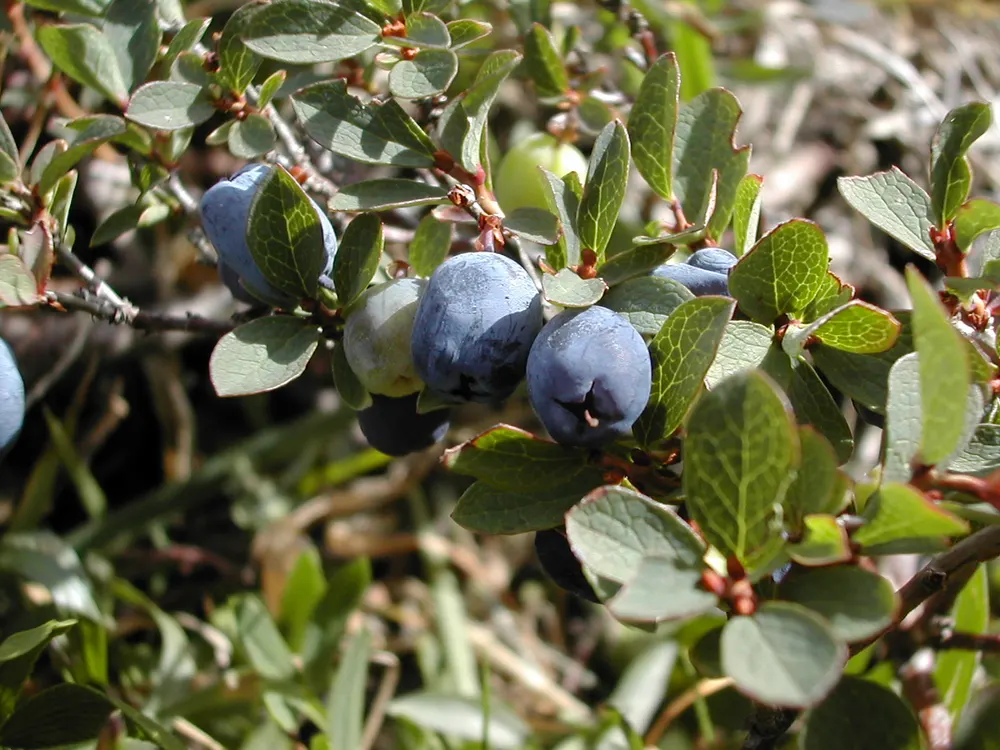
Photo: David Gaya, CC BY-SA 2.5 (via Wikimedia Commons)
Bog Blueberry
Vaccinium uliginosum
Also known as Bog Bilberry, Northern Bilberry, Western Blueberry, Whortleberry
Key benefits
✦Traditional uses
✦Long before it reached any market stall, the bog blueberry fed the people of the far north. Arctic and subarctic communities, from Sami reindeer herders to First Nations of the Canadian tundra, gathered the berries each autumn to eat fresh, dry for winter, or press into leathers that could travel. Because it ripens in some of the harshest growing conditions on earth, it was treasured as a rare source of sweetness and vitamin C at the edge of the growing season, and its juice was traditionally used as a gentle tonic for the blood and circulation. In Scandinavian folk tradition, the berries were also simmered into thick preserves believed to settle an upset stomach.
How to grow & use it
✦The full apothecary for Bog Blueberry
Traditional remedies and step-by-step preparations, a complete growing guide, and how to harvest, dry, and store it, all unlocked with HerbLens Unlimited.
- ✦Remedies & preparations
- ✦ Growing guide
- ✦Harvest & storage
From under $6 a month. Free plant identifications always included.
- ✦Rosehip
- ✦Elderberry
- ✦Nettle
- ✦Bilberry (Vaccinium myrtillus)
- ✦Cultivated blueberry
“For the deep, dusky sweetness of the far north, gathered where the ground stays wild.”
In some northern folk traditions, bog blueberries were said to taste faintly different depending on whether they grew near Labrador tea shrubs, since the two often share the same peaty ground and their roots can mingle, a quirk that made careful foragers pick with an attentive nose.
Bog blueberry is a safe, traditional wild food, but it grows alongside toxic look-alikes like Labrador tea and some crowberry and rhododendron species, so foragers should identify it with certainty before eating.