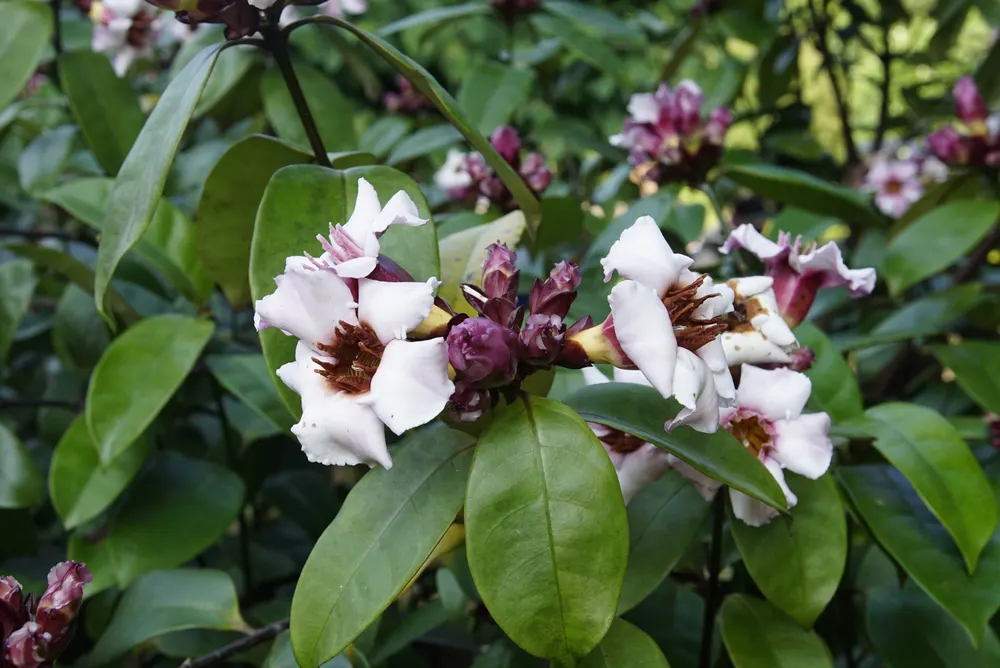
Photo: Vengolis, CC BY-SA 4.0 (via Wikimedia Commons)
Climbing Oleander
Strophanthus gratus
Also known as Gratus Strophanthus, Ouabain Vine, Sweet Strophanthus
Key benefits
✦Traditional uses
✦Strophanthus gratus carries one of the more dramatic stories in botanical history. For generations, hunters across West and Central Africa relied on its seeds to prepare potent poison for arrow and dart tips, a practice that first drew European scientists' attention in the nineteenth century. That same chemistry, distilled down to the compound ouabain (also called g-strophanthin), was later purified and used in European hospitals as a fast-acting injectable heart medicine for acute cardiac failure, prized for how quickly it could act compared to related plant-derived cardiac drugs. It has never been a folk remedy taken by mouth at home, its power always required careful, trained hands.
How to grow & use it
✦The full apothecary for Climbing Oleander
Traditional remedies and step-by-step preparations, a complete growing guide, and how to harvest, dry, and store it, all unlocked with HerbLens Unlimited.
- ✦Remedies & preparations
- ✦ Growing guide
- ✦Harvest & storage
From under $6 a month. Free plant identifications always included.
“A vine so potent it once tipped hunters' arrows and, later, raced through hospital IV lines, admired from a respectful distance, never from a teacup.”
The compound ouabain, isolated from Strophanthus gratus seeds, gets its name from a Somali word for the arrow poison, and for decades it was kept in French hospital emergency kits as a rapid intravenous treatment for failing hearts, a direct descendant of the very poison African hunters once tipped their arrows with.
Strophanthus gratus is genuinely toxic and should never be ingested or self-prepared in any form. Its seeds contain potent cardiac glycosides, chiefly ouabain (g-strophanthin), which act directly and powerfully on the heart; even small miscalculated amounts can cause dangerous arrhythmias, cardiac arrest, or death. This is the same plant chemistry West African hunters historically used to poison arrow and dart tips. It is not a home herbal remedy, and there are no safe traditional teas, tinctures, or infusions to make from it. It is especially dangerous for anyone with heart disease, anyone taking digoxin or other cardiac glycoside medications, anyone on medications that affect potassium levels, and during pregnancy. Keep all parts of the plant, especially the seeds, well out of reach of children and pets. If you or someone else may have ingested any part of this plant, treat it as a medical emergency and seek immediate professional help. This entry is offered for botanical and historical interest only; any heart-related concern belongs in the hands of a licensed healthcare provider.