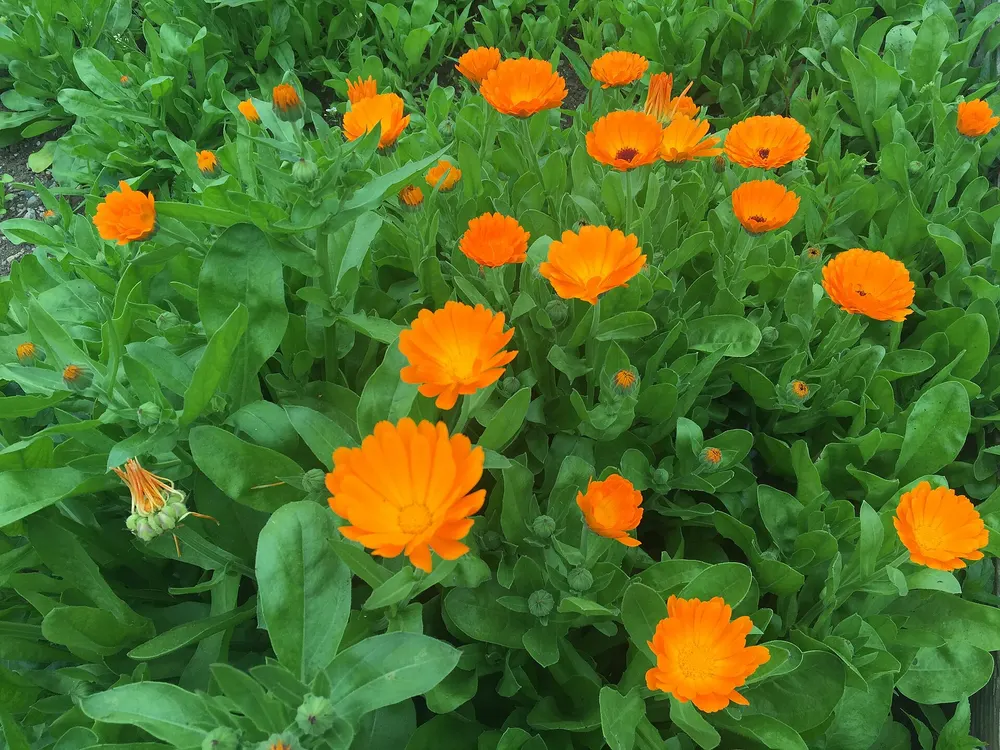
Photo: Betty Cai, CC BY-SA 4.0 (via Wikimedia Commons)
Pot Marigold
Calendula officinalis
Also known as Calendula, Marigold, English Marigold, Garden Marigold, Poor Man's Saffron
Key benefits
✦Traditional uses
✦Calendula has been tended in cottage and monastery gardens since medieval times, prized as much for its cheerful color as for its gentle healing reputation. Herbalists across Europe traditionally turned to its petals for soothing minor skin troubles and calming an unsettled stomach, while cooks stirred the dried petals into broths and butters as a humble stand in for saffron. It became a fixture of the traditional home apothecary, the kind of plant every household grew near the kitchen door so it would always be close at hand.
How to grow & use it
✦The full apothecary for Pot Marigold
Traditional remedies and step-by-step preparations, a complete growing guide, and how to harvest, dry, and store it, all unlocked with HerbLens Unlimited.
- ✦Remedies & preparations
- ✦ Growing guide
- ✦Harvest & storage
From under $6 a month. Free plant identifications always included.
- ✦Chamomile
- ✦Plantain
- ✦Lavender
- ✦Chamomile
- ✦Marshmallow root
“When skin feels irritated, a cut needs tending, or the whole garden could use a little more gold, reach for the marigold.”
Calendula takes its name from the Latin calendae, meaning the first day of the month, because old herbalists noticed it seemed to bloom in nearly every one of them. In cottage gardens it was also called the poor man's saffron, its petals dried and dropped into soups, broths, and butter to lend a warm color when true saffron was too costly to buy.
Calendula is generally gentle and well tolerated, but people allergic to ragweed, daisies, or other Asteraceae plants may react to it too. Medicinal amounts have traditionally been avoided during pregnancy due to its historical use as a uterine stimulant.