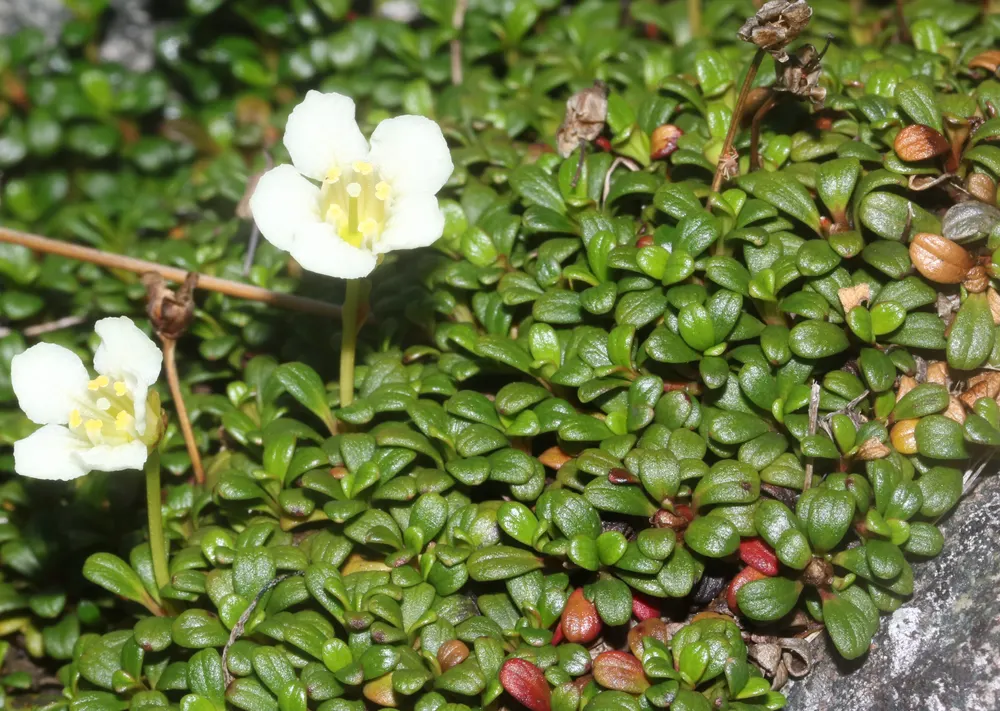
Photo: Alpsdake, CC BY-SA 4.0 (via Wikimedia Commons)
Diapensia
Diapensia lapponica
Also known as Lapland diapensia, Pincushion plant
Key benefits
✦Traditional uses
✦Diapensia lapponica holds no known place in traditional herbal medicine or the kitchen. Its real legacy is as a living relic: it is the type species of the entire Diapensiaceae family, and the tight, ancient cushions that cling to a handful of New England summits are thought to be arctic holdovers from the last ice age, stranded there as the glaciers retreated some ten thousand years ago. Alpine botanists and rock gardeners have long prized it not for what it treats but for what it survives, a small green fist of a plant holding its ground against some of the harshest weather any flowering plant endures. Because there is no established record of it being eaten or used medicinally, this entry is offered as a botanical and ecological portrait rather than a remedy guide.
How to grow & use it
✦The full apothecary for Diapensia
Traditional remedies and step-by-step preparations, a complete growing guide, and how to harvest, dry, and store it, all unlocked with HerbLens Unlimited.
- ✦Remedies & preparations
- ✦ Growing guide
- ✦Harvest & storage
From under $6 a month. Free plant identifications always included.
- ✦Moss campion
- ✦Alpine azalea
- ✦Lingonberry
- ✦Moss campion
“For the gardener chasing the impossible: a fist-sized scrap of the ice age, still blooming on a wind-scoured summit.”
The Diapensia cushions on New Hampshire's Presidential Range are believed to be arctic survivors left behind when the glaciers retreated, meaning the plants growing there today may be genetically closer to their Arctic Canada and Greenland relatives than to anything else blooming in New England, separated from the main body of the species by well over a thousand miles.
There's no history of this plant being used as food or medicine, so it shouldn't be eaten; it's also rare and protected across much of its range, so leave it undisturbed.