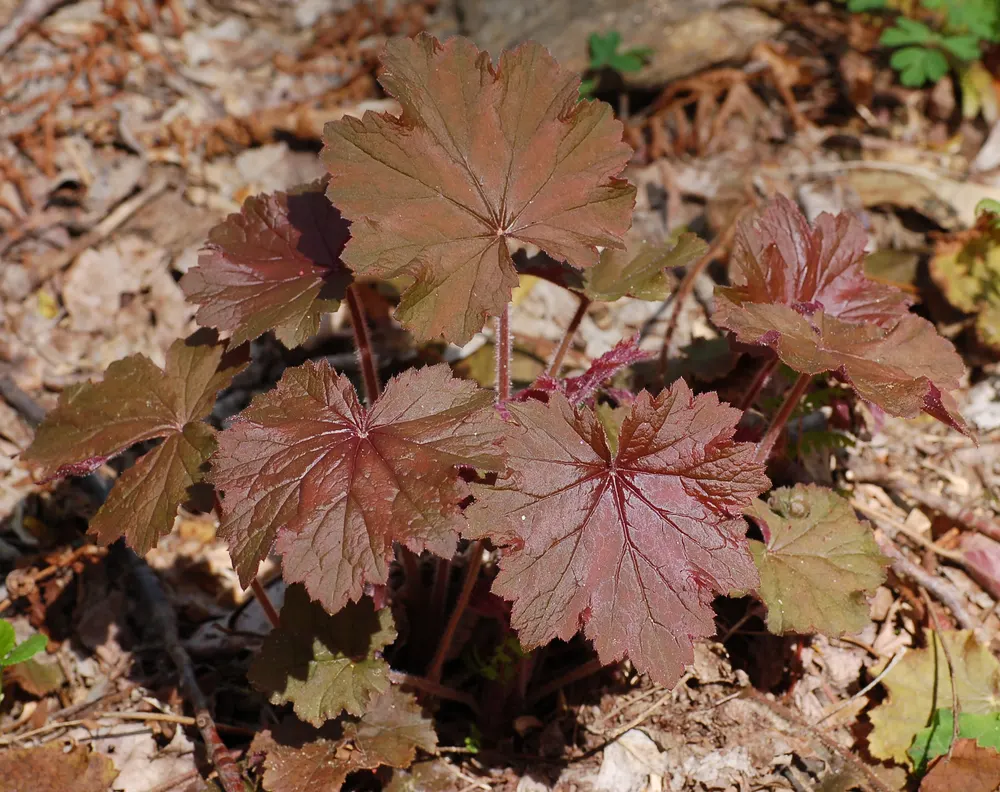
Photo: Photo by and (c)2007 Derek Ramsey (Ram-Man), CC BY-SA 2.5 (via Wikimedia Commons)
Hairy Alumroot
Heuchera villosa
Also known as Hairy Alumroot, Maple-leaf Alumroot, Rock Geranium, Tall Alumroot
Key benefits
✦Traditional uses
✦Long before it found its way into rock gardens, hairy alumroot was a working plant in the Appalachian mountains, its puckery, tannin-rich root dug and dried by Cherokee healers and later by mountain settlers who learned from them. The root was traditionally steeped or decocted into a strong, astringent wash for wounds, sores, and minor bleeding, and taken in small amounts as a tea to help settle occasional loose stools. Because the whole plant grows tucked into shaded cliffs and rocky coves, it earned a quiet reputation as a hidden helper of the high country, something you had to know the mountain to find. Today it lives mostly in gardens, prized for its maple-shaped leaves and delicate flower sprays, its old herbal role largely forgotten outside a few Appalachian families who still remember the root.
How to grow & use it
✦The full apothecary for Hairy Alumroot
Traditional remedies and step-by-step preparations, a complete growing guide, and how to harvest, dry, and store it, all unlocked with HerbLens Unlimited.
- ✦Remedies & preparations
- ✦ Growing guide
- ✦Harvest & storage
From under $6 a month. Free plant identifications always included.
- ✦Yarrow
- ✦Plantain
- ✦Witch hazel
- ✦Cranesbill (wild geranium)
- ✦White oak bark
“For the quiet, puckering strength found tucked into a shaded mountain ledge, the old herbal companion of Appalachian cliffs and coves.”
The name alumroot comes straight from the tongue, chew a bit of the fresh root and its intense, puckering tannins mimic the taste of alum, the same mineral early settlers used for pickling and tanning hides.
Hairy alumroot is not known to be toxic, but its root is very high in tannins, and taking strong preparations internally in large amounts or over long periods can irritate the stomach or interfere with the absorption of certain minerals and medications, so any internal use has traditionally been kept modest and occasional. Safety during pregnancy and nursing has not been established, so it is best avoided in those situations. As with any astringent plant, discontinue use if skin irritation develops with topical application. As always, speak with a qualified healthcare professional before using hairy alumroot medicinally, especially alongside other medications.