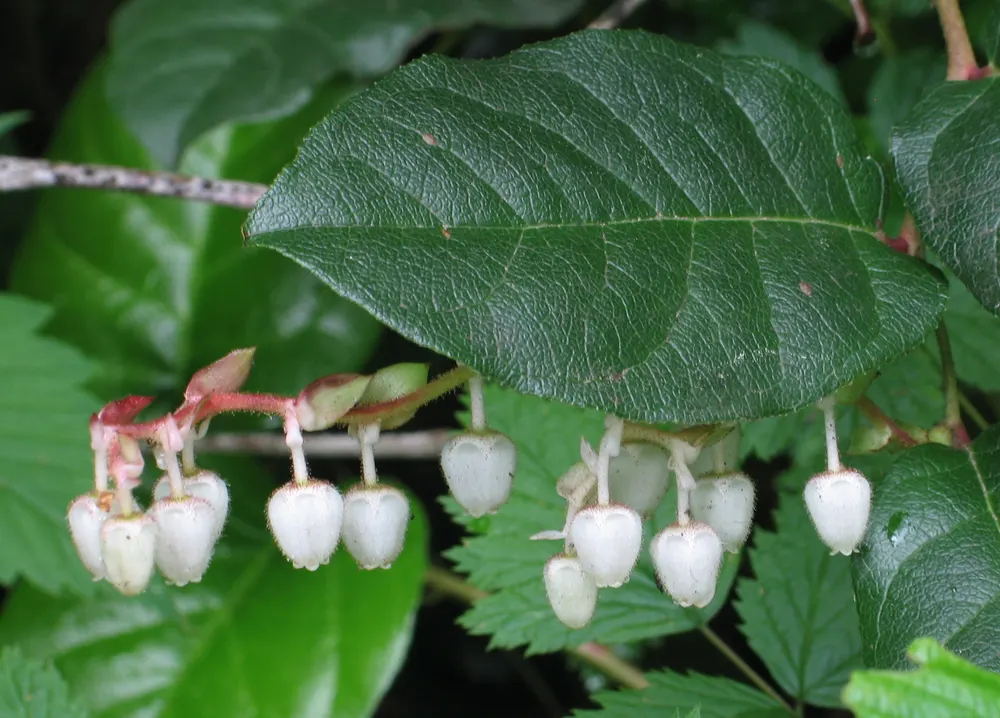
Photo: Robert Flogaus-Faust, CC BY 4.0 (via Wikimedia Commons)
Salal
Gaultheria shallon
Also known as Salal Berry, Shallon, Gaultheria, Oregon Wintergreen
Key benefits
✦Traditional uses
✦Salal berries were, and still are, a staple wild food for many Pacific Northwest Coast peoples, eaten fresh by the handful, mashed and dried into cakes for winter stores, or mixed with other berries and preserved in oil. The tough, leathery leaves have traditionally been used as an astringent, chewed to ease hunger and thirst on long journeys, brewed into a tea for digestive upset, and applied as a poultice to soothe burns, cuts, and insect stings. Because the shrub grows so abundantly in coastal forests, it became one of the most reliable and generous plants a forager could turn to, valued as much for its steady presence as for any single use.
How to grow & use it
✦The full apothecary for Salal
Traditional remedies and step-by-step preparations, a complete growing guide, and how to harvest, dry, and store it, all unlocked with HerbLens Unlimited.
- ✦Remedies & preparations
- ✦ Growing guide
- ✦Harvest & storage
From under $6 a month. Free plant identifications always included.
- ✦Oregon grape root
- ✦Huckleberry leaf
- ✦Blackberry leaf
- ✦Bilberry leaf
- ✦Blueberry leaf
“For the hush of the coastal forest floor, and a berry sweet enough to forgive its thicket of thorns.”
The Scottish botanist David Douglas, who later lent his name to the Douglas fir, was so taken with salal's glossy leaves and dark berries that he called it one of the finest shrubs he had ever collected. It became one of the earliest Pacific Northwest plants to cross the Atlantic into English gardens, and its evergreen sprigs are still shipped worldwide today as florists' greenery.
Salal berries are safe and pleasant to eat; the leaves are quite astringent and can upset the stomach if brewed too strong.