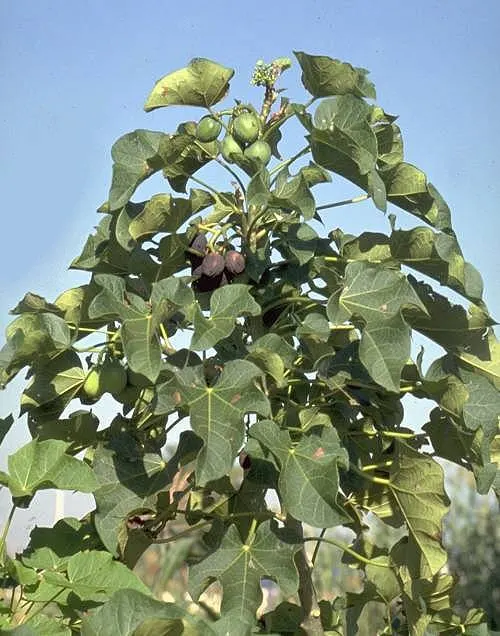
Photo: CC BY-SA 2.5 (via Wikimedia Commons)
Physic Nut
Jatropha curcas
Also known as Barbados Nut, Purging Nut, Pinhoen, Curcas Bean, Black Vomit Nut
Traditional uses
✦Physic nut earned its common name from centuries of use as a purgative, though that very use has caused so much accidental poisoning that herbalists today consider the plant far too dangerous to recommend. Long before it became known mostly as a biodiesel crop, village healers across Mexico, the Caribbean, and later Africa and Asia planted it as a living fence, since goats and cattle instinctively avoid browsing it. The thick red latex that oozes from a cut stem was traditionally dabbed onto small wounds to help stop bleeding and was believed to guard against infection, and the oil pressed from the seeds was rubbed onto the skin for rheumatic aches. None of these uses involved eating any part of the plant, and that distinction matters enormously with this particular herb.
How to grow & use it
✦The full apothecary for Physic Nut
Traditional remedies and step-by-step preparations, a complete growing guide, and how to harvest, dry, and store it, all unlocked with HerbLens Unlimited.
- ✦Remedies & preparations
- ✦ Growing guide
- ✦Harvest & storage
From under $6 a month. Free plant identifications always included.
- ✦Castor (Ricinus communis), another traditional purgative plant that is similarly dangerous and best left to trained professionals
“A thorny, drought-proof hedge for a hot dry garden, never a plant for the kitchen or the medicine shelf.”
A single physic nut seed contains curcin, a toxin closely related to the ricin found in castor beans, which is why even a small handful of the oily, walnut-like seeds has caused severe poisoning and death in children who mistook them for food.
Physic nut is genuinely toxic and every part of the plant, especially the seeds, can cause severe harm if eaten. The seeds contain curcin, a toxalbumin related to the ricin in castor beans, along with irritating phorbol esters, and ingesting even a few seeds has caused violent vomiting, bloody diarrhea, dehydration, and documented deaths, particularly in children who mistake the oily kernels for edible nuts. The milky latex and leaves are also irritating to skin, eyes, and mucous membranes and should not be applied to broken skin or near the eyes. Because of this real danger, no ingestible remedy is given here, and this plant should never be used as a home purgative or folk medicine despite its historical reputation for that purpose. If you or a child has eaten any part of this plant, contact Poison Control or emergency services immediately rather than attempting any home treatment, and consult a qualified professional before growing it anywhere children, pets, or livestock have access.