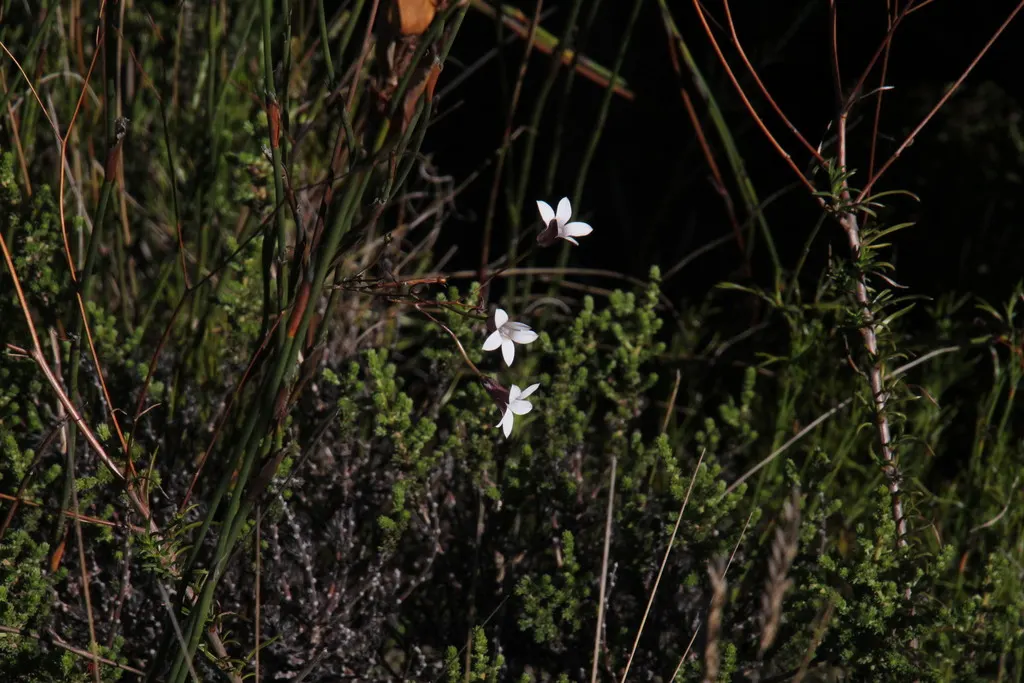
Photo: (c) Tony Rebelo, CC BY-SA (via iNaturalist)
Shrubby Prismcarp
Prismatocarpus fruticosus
Key benefits
✦Traditional uses
✦Prismatocarpus fruticosus belongs to a genus of small, wiry shrubs found only in the fynbos of South Africa's Cape Floristic Region, one of the richest and most tightly packed plant kingdoms on earth. Unlike many of its Cape neighbors, such as buchu or rooibos, this particular species has no documented history of use by the Khoi, San, or later settler herbal traditions that we could find. It seems to have lived quietly on its sandstone slopes, known mainly to botanists and to the bees and long-tongued flies that visit its small bell-shaped flowers. That absence of a use record is worth honoring rather than papering over, since so much of the fynbos has yet to be studied at all.
How to grow & use it
✦The full apothecary for Shrubby Prismcarp
Traditional remedies and step-by-step preparations, a complete growing guide, and how to harvest, dry, and store it, all unlocked with HerbLens Unlimited.
- ✦Remedies & preparations
- ✦ Growing guide
- ✦Harvest & storage
From under $6 a month. Free plant identifications always included.
“For the quiet satisfaction of a small, wiry Cape shrub doing its own patient work on a sandstone slope, not for the medicine chest.”
The genus name Prismatocarpus comes from the Greek for prism and fruit, describing the angular, faceted seed capsules that many species in this group produce, a small architectural detail easy to miss unless you crouch down on a fynbos slope and look closely.
This fynbos plant has no documented history of food or medicinal use, so it should not be eaten or brewed as tea.