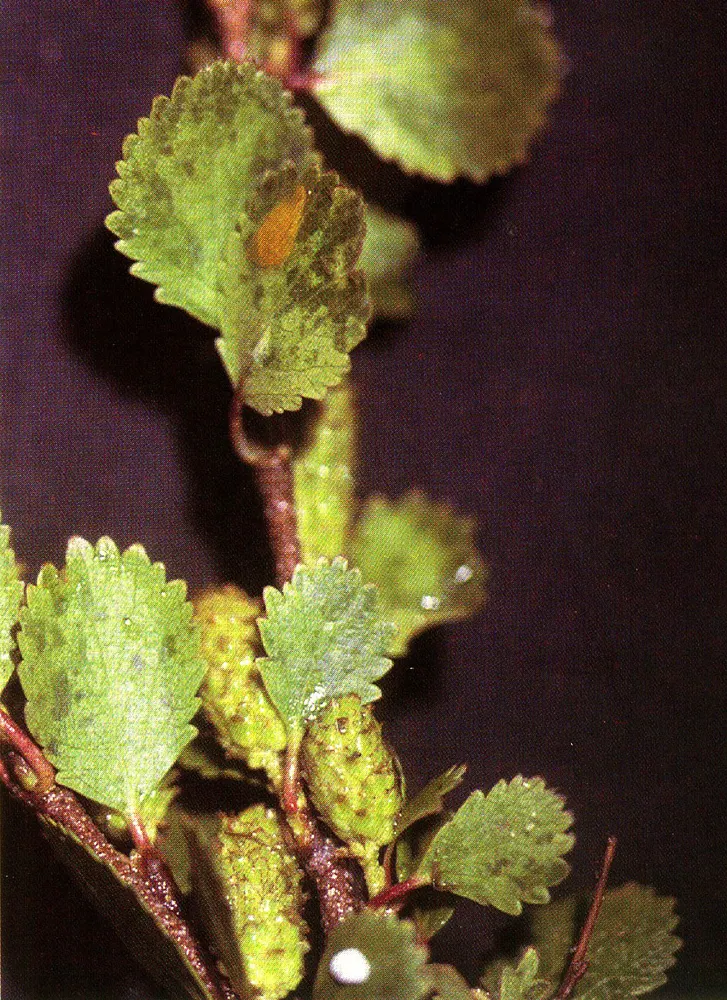
Photo: USDA photo, uploader user:MPF, Public domain (via Wikimedia Commons)
Dwarf Birch
Betula nana
Also known as Arctic Birch, Tundra Birch, Bog Birch
Key benefits
✦Traditional uses
✦Where the tree line gives out and no tall birch will grow, dwarf birch has long stood in for its taller cousins. Sami, Inuit, Chukchi, and other circumpolar peoples gathered its wiry stems for fuel in a landscape nearly without firewood, and its tannin-rich leaves and bark were boiled for dyeing and tanning hides. In some Arctic communities, the leaves were also steeped as a simple tea in the same tradition as silver and downy birch, taken for their mild diuretic, cleansing quality. Because it grows where almost nothing else can, dwarf birch became something of a quiet lifeline, useful in small ways for people who had to make do with what the tundra offered.
How to grow & use it
✦The full apothecary for Dwarf Birch
Traditional remedies and step-by-step preparations, a complete growing guide, and how to harvest, dry, and store it, all unlocked with HerbLens Unlimited.
- ✦Remedies & preparations
- ✦ Growing guide
- ✦Harvest & storage
From under $6 a month. Free plant identifications always included.
- ✦Bearberry (Uva-ursi)
- ✦Lingonberry Leaf
- ✦Labrador Tea
- ✦Silver Birch (Betula pendula) leaf
- ✦Downy Birch (Betula pubescens) leaf
“For the low, wind-bent birch of the tundra edge, where no tall tree dares grow.”
Dwarf birch has become an unlikely star of climate science: as Arctic summers warm, its low mats are creeping and thickening across the tundra in a process researchers call shrubification, and scientists now track its spread from satellite images as a living gauge of a changing north.
Birch pollen is a common allergen and can cross-react with apples, hazelnuts, celery, and carrots in sensitive people. Its leaf tea has a mild diuretic effect, so it is best avoided in pregnancy, with kidney conditions, or alongside diuretic medication.