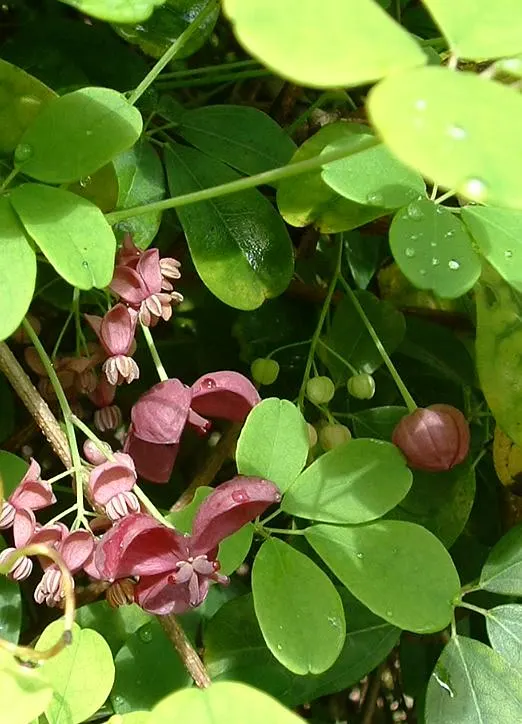
Photo: CC BY-SA 3.0 (via Wikimedia Commons)
Chocolate Vine
Akebia quinata
Also known as Five-Leaf Akebia, Akebi, Mu Tong (traditional Chinese name for the dried stem)
Key benefits
✦Traditional uses
✦Chocolate vine has long been welcomed into East Asian gardens more for its beauty and generosity than for medicine. In Japan, children have gathered its pale purple, sausage-shaped pods for generations, splitting them open to eat the sweet, translucent pulp inside, seeds and all, much like a wild candy of the woods. In traditional Chinese medicine, the dried stem was known as Mu Tong and was steeped into decoctions thought to promote urination and clear heat from the body. The young leaves have also been dried for a light, mild tea in folk practice. Because the fruit rarely sets in cultivation without a compatible pollinator nearby, a ripe pod has always felt a bit like a small woodland reward.
How to grow & use it
✦The full apothecary for Chocolate Vine
Traditional remedies and step-by-step preparations, a complete growing guide, and how to harvest, dry, and store it, all unlocked with HerbLens Unlimited.
- ✦Remedies & preparations
- ✦ Growing guide
- ✦Harvest & storage
From under $6 a month. Free plant identifications always included.
- ✦Jasmine
- ✦Chrysanthemum
- ✦Honeysuckle
- ✦Passionfruit (for the fruit pulp texture and flavor)
- ✦Holboellia (a close botanical relative with similar sweet pods)
“When you want a vine that scents the spring air like cocoa, then hands you a strange, sweet little pod come autumn.”
The vine's small spring flowers genuinely smell like chocolate and vanilla, a fragrance so distinctive that gardeners who plant it near a porch or window often notice it before they ever see the blooms tucked among the leaves.
Chocolate Vine's fruit pulp and young leaves are safe in the traditional, modest amounts described here. Dried Akebia stem, sold in herbal markets as Mu Tong, has historically been mixed up with a toxic Aristolochia vine that caused serious kidney damage, so stem preparations should only come from a tested, reputable source if used at all. Because of its diuretic effects, avoid concentrated preparations if you have kidney issues, take diuretics, or are pregnant or breastfeeding.