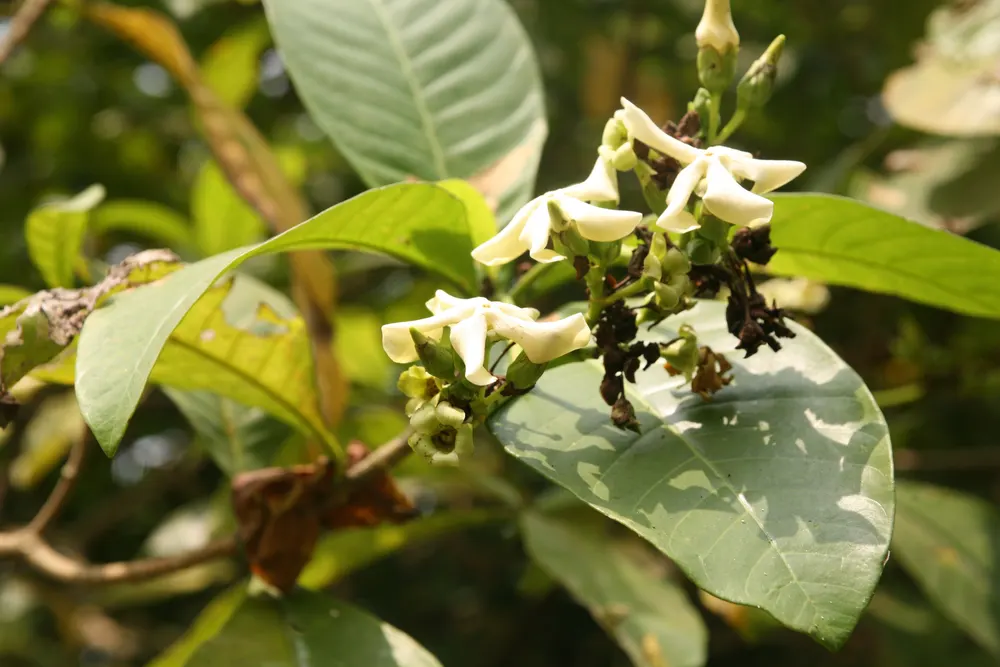
Photo: Hiobson, CC BY-SA 4.0 (via Wikimedia Commons)
African Voacanga
Voacanga africana
Also known as African voacanga, Wild frangipani, Voacanga seed tree
Key benefits
✦Traditional uses
✦In parts of West and Central Africa, traditional healers have long turned to the root bark and seeds of Voacanga africana, working it into local systems of medicine and into ceremonial and spiritual practice. The tree's alkaloid-rich bark drew early ethnobotanical attention, and it came to be recognized as a close botanical relative of iboga, the plant central to Bwiti spiritual tradition in Central Africa. In the twentieth century, Voacanga africana took on a new role as one of the world's main commercial sources of voacangine, an alkaloid extracted from its bark for use as a starting material in pharmaceutical and ibogaine related research. Its story is really one of chemistry and cultural weight, a tree valued for what grows inside its bark rather than for any place at the kitchen table.
Growing guide
✦Fresh to dried
✦“A tree known through its chemistry and its place in West African tradition, not through any cup of tea, best left to researchers and traditional specialists rather than home use.”
Voacanga africana is one of the world's principal commercial sources of voacangine, an alkaloid drawn from its bark and used as a starting material in ibogaine related pharmaceutical research, tying this African forest tree to the same chemical family as its far more famous relative, iboga.
Voacanga africana contains potent indole alkaloids, including voacangine and related iboga type compounds, concentrated in its root bark, stem bark, and seeds. These alkaloids are psychoactive and have been associated with cardiac arrhythmia and other serious cardiovascular effects, and voacangine itself serves as a precursor in the production of ibogaine, a substance that is controlled or restricted in a number of countries. This is not a plant for home teas, tinctures, or any form of self-directed ingestion. It should never be used by pregnant or nursing women, anyone with a heart condition, or without the direct supervision of a qualified medical or botanical professional in a setting equipped to manage its effects. If you are researching this plant for any reason beyond general botanical interest, please consult a licensed healthcare provider or toxicologist first.