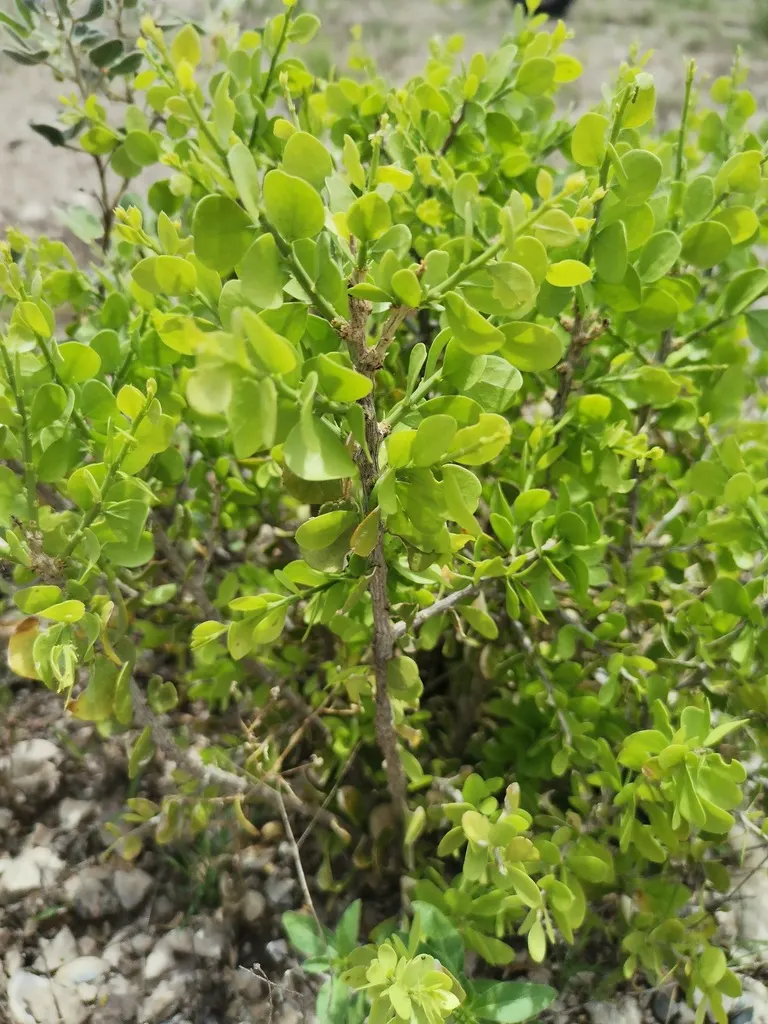
Photo: (c) Karla M. Benítez, CC BY (via iNaturalist)
Desert Yaupon
Schaefferia cuneifolia
Also known as Capul Negro, Panalero, Desert Boxleaf
Key benefits
✦Traditional uses
✦Desert yaupon has never really been an herb of the kitchen or medicine cabinet. Its value has always been quietly ecological rather than medicinal, a tough little desert shrub that ranchers and naturalists in the brushlands of South Texas and northern Mexico came to recognize as reliable winter forage for wildlife. Mockingbirds, quail, and other birds strip its scarlet berries through the cold months, and its dense, spiny thicket has long offered small animals cover from predators and weather. Unlike so many plants in this atlas, it does not carry a documented lineage of human remedies, and that absence is worth stating honestly rather than papering over.
How to grow & use it
✦The full apothecary for Desert Yaupon
Traditional remedies and step-by-step preparations, a complete growing guide, and how to harvest, dry, and store it, all unlocked with HerbLens Unlimited.
- ✦Remedies & preparations
- ✦ Growing guide
- ✦Harvest & storage
From under $6 a month. Free plant identifications always included.
- ✦Cenizo (Texas sage)
- ✦Agarito
- ✦Guayacán
- ✦Lotebush (Condalia)
- ✦Desert olive (Forestiera)
“For the gardener who wants a tough, thorny native that needs almost no water and keeps the birds fed all winter long.”
Despite its common name, desert yaupon is not related to true yaupon, Ilex vomitoria, the holly whose caffeine-rich leaves Native peoples of the Southeast brewed into the ceremonial black drink. The two plants simply share a folk name and a knack for growing where little else will.
Desert yaupon has no well-documented history as a food or medicinal herb, and its berries are not established as safe for human consumption, so they should not be eaten. Its sharp spine-tipped twigs can scratch or puncture skin, so wear gloves when pruning or planting near it. Because of the shared common name, take care not to confuse it with true yaupon holly (Ilex vomitoria), a different plant with a different chemistry and history. As with any plant of uncertain edibility, do not ingest any part of it, and consult a qualified professional, such as a botanist, herbalist, or physician, before considering any traditional plant for health use.