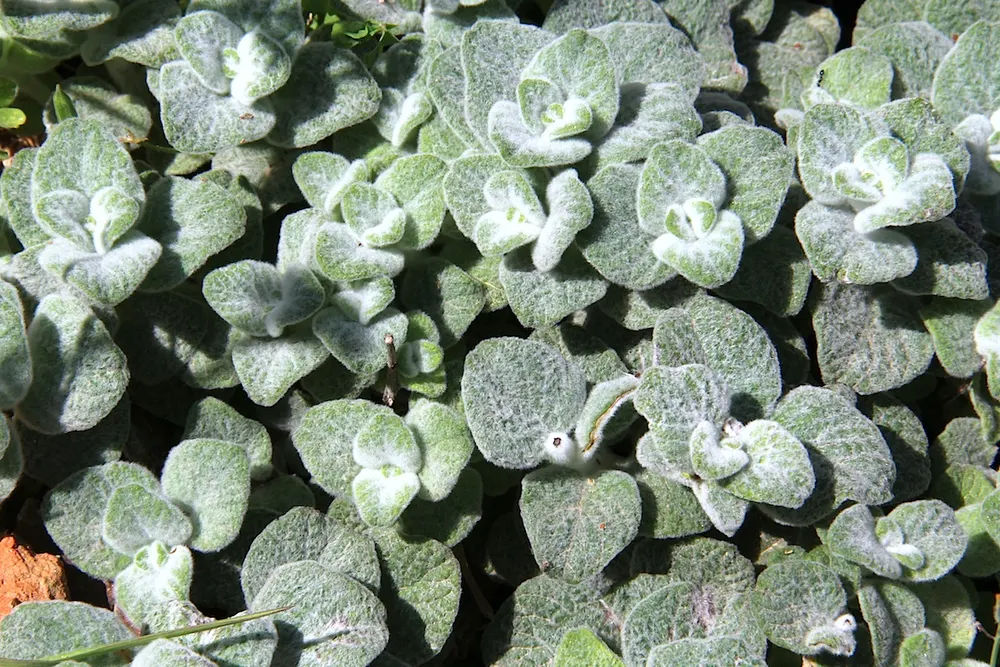
Photo: Peter A. Mansfeld, CC BY 3.0 (via Wikimedia Commons)
Dittany of Crete
Origanum dictamnus
Also known as Cretan Dittany, Hop Marjoram, Diktamo, Erontas (the love herb)
Key benefits
✦Traditional uses
✦For thousands of years, the people of Crete have climbed down cliff faces on ropes to gather this soft, silvery-leaved herb, a practice so perilous it became entwined with courtship legend, as young men risked the gorges to bring dittany home to the women they hoped to marry. Ancient physicians praised it as a wound herb, and Aristotle wrote that wild goats on Crete sought it out after being struck by hunters' arrows, believing it helped draw out the point and close the wound. Beyond its legendary reputation for healing cuts and bruises, islanders have long steeped the felted leaves into a fragrant tea, sipped for a soothed stomach, an eased cough, and general comfort during illness. It remains one of the most cherished herbs of Greek folk medicine, still gathered and sold as Cretan tea today.
How to grow & use it
✦The full apothecary for Dittany of Crete
Traditional remedies and step-by-step preparations, a complete growing guide, and how to harvest, dry, and store it, all unlocked with HerbLens Unlimited.
- ✦Remedies & preparations
- ✦ Growing guide
- ✦Harvest & storage
From under $6 a month. Free plant identifications always included.
- ✦Greek sage
- ✦Chamomile
- ✦Lemon and honey
- ✦Oregano
- ✦Sweet marjoram
“For a taste of a sun-baked Cretan cliffside in a cup, gentle and warming.”
Aristotle recorded that wounded wild goats on Crete would seek out and eat dittany leaves, a belief so enduring that the plant became known across the ancient world as a wound herb, and it later appears in Virgil's Aeneid as the plant Venus uses to heal her son's battle wound.
Dittany of Crete is not known to be toxic and has a long history of use as a culinary and tea herb in Greece, but it is now a protected and vulnerable species in its wild habitat, so only wild-harvested plants that were sustainably or legally sourced should ever be used. As with other members of the mint family, it may cause a reaction in those with allergies to oregano, thyme, sage, or lavender. Its safety during pregnancy and breastfeeding has not been well studied, and traditional Greek use has included it as a folk remedy for menstrual complaints, so it is best avoided in medicinal amounts during pregnancy. As always, speak with a qualified healthcare provider before using dittany for any therapeutic purpose, especially alongside medications.